
NewBee Machinery is a professional machinery parts manufacturer providing high quality precision bearings, high-quality non-standard transmission components, and intelligent CNC equipment and more.
NewBee Machinery is a professional machinery parts manufacturer providing high quality precision bearings, high-quality non-standard transmission components, and intelligent CNC equipment and more.
A ball bearing is a type of rolling-element bearing that uses balls to maintain the separation between the bearing races.
The purpose of a ball bearing is to reduce rotational friction and support radial and axial loads.It achieves this by using at least two races to contain the balls and transmit the loads through the balls.In most applications,one race is stationary and the other is attached to the rotating assembly.As one of the bearing races rotates it causes the balls to rotate as well.Because the balls are rolling,they have a much lower coefficient of friction than if two flat surfaces were sliding against each other.
Ball bearings are widely adopted across almost all industries with rotating components.They excel in working conditions combining moderate load,high speed and compact envelope constraints.Below are seven major application fields covering most global ball-bearing consumption.
Automotive
Modern vehicles deploy ball bearings on numerous positions.Wheel-hub units withstand combined radial-axial wheel loads.Transmission and differential shafts use deep-groove ball bearings,often assembled together with tapered-roller bearings.Alternators,water pumps,air-conditioning compressors and starter motors all adopt ball bearings to resist continuous vibration,temperature fluctuation and long-time cyclic operation.
Electric-vehicle traction motors increasingly use ceramic-hybrid ball bearings.Silicon-nitride rolling elements block inverter-induced shaft currents which would otherwise cause electrical pitting damage on steel raceways.
Industrial Machinery and Manufacturing
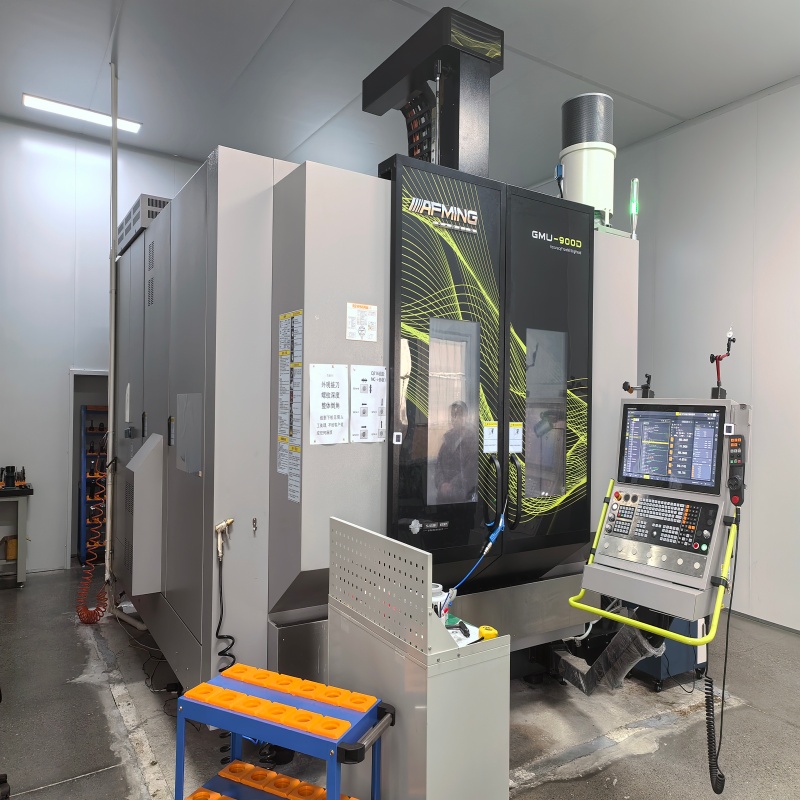
Electric motors,the backbone of modern industry,mostly run on deep-groove ball bearings.Precision CNC machine-tool spindles adopt matched angular-contact ball bearings to maintain micron-level accuracy under high-speed cutting operations.Conveyors,packaging equipment and industrial fans rely on reliable ball-bearing performance to maximise uptime.
For heavy-duty mill working conditions beyond ball-bearing load limits,multi-row tapered-roller or cylindrical-roller bearings will be the proper alternative solution.
Aerospace and Defense
Bearings used for aircraft equipment demand extremely high reliability.Main-shaft bearings for turbofan aero-engines operate under high-temperature and high-speed circumstances;premium-grade designs widely adopt silicon-nitride ceramic balls.Low-density ceramic rolling elements reduce mass and centrifugal inertial force to realise higher permissible rotational speed.Ultra-precision miniature ball bearings are applied for gyroscopes and inertial navigation assemblies.
Medical and Dental Devices
Air-turbine dental handpieces can reach 400 000 rpm,which is realised by high-performance miniature precision ball bearings.The bearings must enable full stop-to-standstill before instruments are pulled out from patient oral cavities.Surgical robots,MRI/CT scanner gantries and laboratory centrifuges also depend on custom-built precision ball bearings.
Consumer Electronics and Appliances
Early hard-disk drives used ball-bearings:later they switched to hydrodynamic bearings for near-silent running.Miniature ball bearings are widely used for cooling fans in laptops,servers and gaming computers with tens-of-thousands-hour rating.Washing-machine drums,vacuum-cleaner motors,blenders and power tools are typical household application examples.
Robotics and Automation
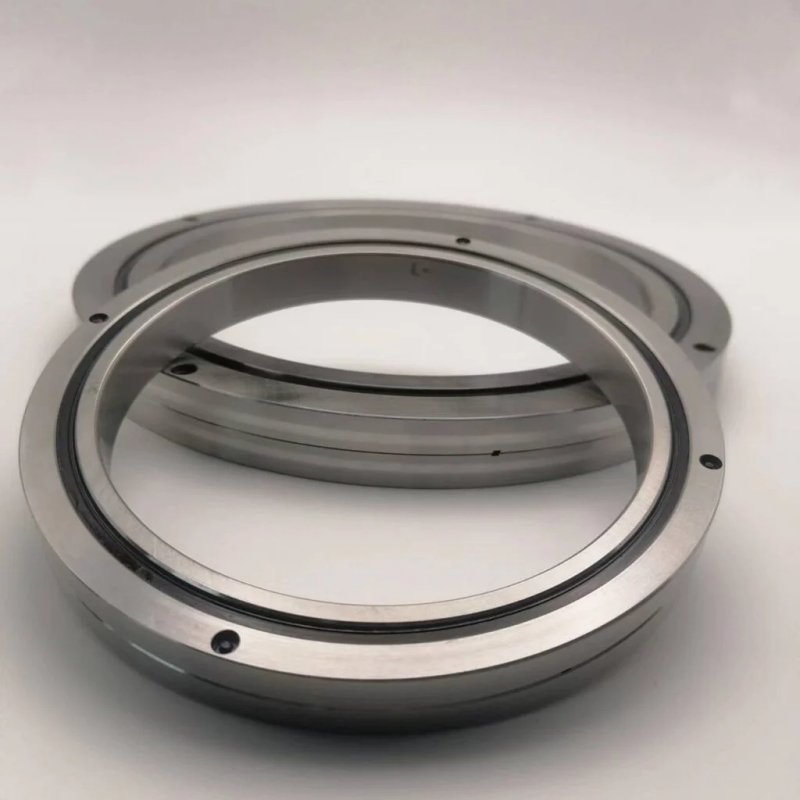
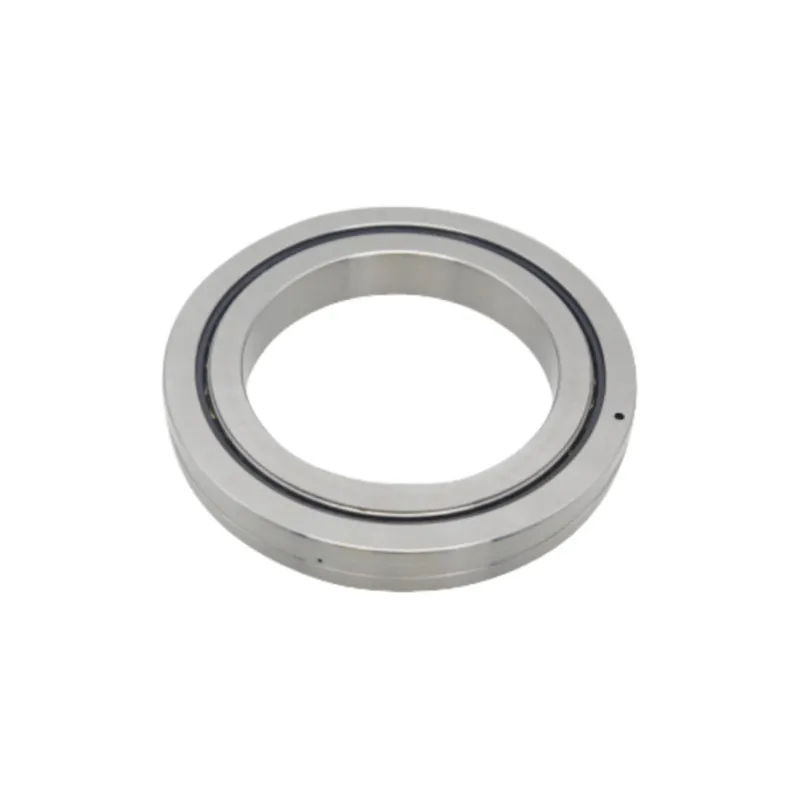
Modern robotic arms require precise repeatable positioning over millions of working cycles.Precision angular-contact ball bearings and crossed-roller bearings are mainstream choices for robot joint structures.Although crossed-roller bearings belong to roller-bearing category,they are frequently compared and selected alongside ball-bearing solutions in joint design work.
Recreational and Sporting Equipment
Skateboard and inline-skate wheels adopt ABEC-rated ball bearings,generally ABEC-3 ~ ABEC-7 grades.Bicycle hubs,bottom-bracket assemblies and headset units use either cup-and-cone or cartridge ball bearings.Even fishing reels are equipped with corrosion-resistant miniature ball bearings for smooth spool retraction.
Five Ball Bearing Types You Will Specify In Real Projects
Five typical geometries cover the overwhelming majority of industrial and commercial ball-bearing use-cases.Each type is optimised for specific load directions,speed ranges and mis-alignment tolerance levels.
Practical notes seldom shown in standard catalogues:
Deep groove ball bearing: Normally your default starting selection.If deep-groove bearings satisfy load-speed requirements,their cost and stock availability are hard to beat.
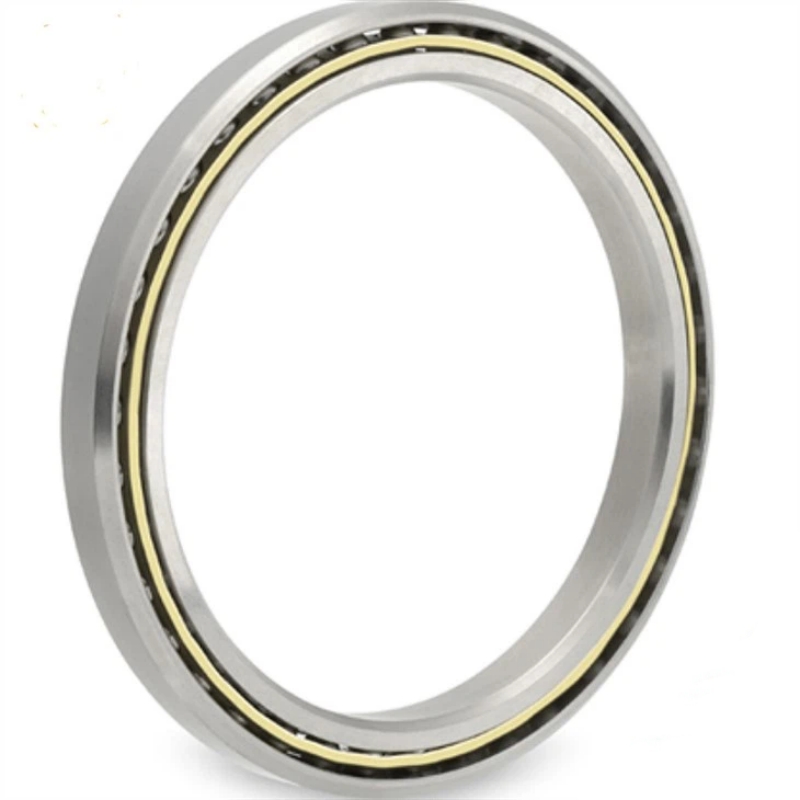
Angular contact ball bearing: Almost always installed as matched duplex sets (back-to-back DB/face-to-face DF/tandem DT),enabling bidirectional thrust capacity and controlled preload.
Thrust ball bearing: Designed for pure-axial-load conditions.Mounting them on shafts with considerable radial load is one common cause for premature returned-bearing failures.
Self-aligning ball bearing: Compensates both static and dynamic shaft-housing misalignment.Allowable deflection angle varies with series and sealing configuration;always refer to official catalogue data.Trade-off: lower load rating compared with spherical-roller bearings solving identical mis-alignment problems.
Miniature ball bearing (bore down to 1 mm): Focus on precision and low noise instead of heavy-load capacity.ABEC precision grade matters significantly for miniature-size units.
Material selection prioritises environment and speed requirements,followed by load-capacity evaluation.Three major material families dominate commercial applications.

Important note: Actual temperature limits are determined by steel heat-stabilising treatment rather than alloy composition alone.Always check catalogue operating-temperature parameters before final specification.
Ceramic-hybrid bearings use silicon-nitride balls fitted into steel rings.Benefits include lighter rolling elements,cooler running at high speed,improved rigidity,better contamination resistance and electrical insulation which eliminates inverter-induced shaft currents for EV motors.
Two common misunderstandings about hybrid ceramic bearings:
Hybrid units are not corrosion-proof,as inner/outer rings remain steel material and still need proper sealing or stainless-steel upgrades.
Hybrid units are not high-temperature bearings.Silicon-nitride itself can sustain ~800 °C,yet this performance only applies for full-ceramic bearings (ceramic rings + ceramic balls).Do not specify hybrid bearings purely relying on ceramic high-temperature performance data.
Cost premiums versus all-chrome-steel bearings exist but keep decreasing year-by-year.
Wrong bearing selection not only shortens service-life,but may trigger unplanned downtime,equipment damage and production loss.Follow these five sequential questions for specification work:
Load type and direction: Predominantly radial → deep-groove ball bearing.Combined radial-axial load → angular-contact ball bearing with DB/DF/DT duplex mounting to realise preload and bidirectional thrust capacity.Pure axial load → thrust ball bearing.
Rotational speed: Higher-speed applications need low-friction bearing geometry plus suitable lubrication.Compare bearing DN value (bore size mm × rotating rpm) with manufacturer grease-/oil-lubrication limits.
Operating environment: Moisture,dust,chemical medium and extreme temperature decide material choice (52100/440C/ceramic-hybrid) and sealing configuration (open/shielded ZZ/sealed-for-life 2RS).
Precision grade: General-industrial applications adopt ABEC-1 or ABEC-3 conforming to ANSI/ABMA 20.Machine-tool and aerospace high-precision assemblies may require ABEC-7 or ABEC-9.
Maintenance scheme: 2RS sealed bearings are factory-greased and maintenance-free.Open-type or ZZ shielded bearings permit re-lubrication for long-service-life equipment.
When uncertainties remain,perform L₁₀ rating-life calculation following ISO 281 against manufacturer-published basic dynamic load rating C.Common engineering practice adds 20-30 % safety margin on dynamic-load rating to extend service-life beyond theoretical minimum requirements.
NewBee Transmission supply note: NewBee Transmission manufactures full-series deep-groove,angular-contact,thrust,self-aligning and miniature ball bearings.Our product portfolio covers bore sizes 3 mm-1200 mm,precision grades P0/P6/P5/P4.Material options include GCr15 chrome bearing steel,440C stainless steel and silicon-nitride ceramic-hybrid variants.Open,shielded ZZ and sealed 2RS configurations are available from stock.Our engineering team provides L₁₀ life calculation,type-selection consultation and custom modification services for special working-condition projects.
Q: Where do we find ball bearings in daily-life products?
A: Ball bearings appear in nearly every rotating consumer product: car wheel hubs and alternators,washing-machine drums,vacuum-cleaner motors,server & laptop cooling fans,refrigerator compressors,e-scooters,skateboards,fishing reels,dental handpieces and drone motors.Wherever a shaft spins under moderate-load and medium-to-high-speed conditions,ball bearings are the most common rotating support component.
Q: What is the difference between ball bearings and roller bearings?
A: Ball bearings utilise spherical rolling elements with point-contact on raceways,delivering lower friction and higher permissible speed but relatively lower load capacity.Roller bearings adopt cylindrical/tapered/barrel-shaped rollers with line-contact on raceways,supporting much heavier dynamic loads at the expense of maximum rotating speed.
Q: Why do EV traction motors increasingly adopt ceramic-hybrid ball bearings?
A: E-motor systems run at high rotating speed,driven by variable-frequency inverters that create harmful shaft currents eroding conventional steel bearing raceways.Silicon-nitride ceramic balls provide electrical insulation to cut off current path and prevent electrical pitting damage.Lower mass of ceramic balls also reduces centrifugal inertial force for higher-speed tolerance.
Q: Can ceramic-hybrid ball bearings work under high-temperature conditions?
A: Hybrid bearing temperature limits come from steel rings and lubricants instead of silicon-nitride balls.The ~800 °C temperature rating of silicon-nitride applies only for full-ceramic bearings with both ceramic rings and balls.Always refer to catalogue data for hybrid-bearing maximum permissible temperature.
Q: Does higher ABEC rating represent better bearing overall-quality?
A: No.ABEC grades defined by ANSI/ABMA 20 only specify dimensional and rotational geometrical tolerances.They do not evaluate load capacity,surface finish,internal clearance,grease formulation or noise performance.High ABEC grades are critical for precision spindles,while for general-purpose applications internal geometry and lubrication exert greater real-world influence.
Q: What typical service-life can ball bearings achieve for standard industrial motors?
A: Bearing service-life is defined by ISO 281 L₁₀ concept: operating hours when 90 % identical bearings survive under identical working loads.Correctly-selected and properly-lubricated ball bearings in ordinary industrial motors normally achieve 20 000-50 000 operating hours.Most early-stage failures result from lubrication failure and contamination rather than material fatigue.
Q: When should engineers switch from ball bearings over to roller-bearing solutions?
A: Switch when sustained radial or combined load exceeds ball-bearing capacity within given installation envelope,or when obvious shock-loading exists.Heavy-duty industrial scenarios such as rolling mills,large gearboxes and heavy-duty pumps mostly deploy roller-bearing products.
Ball bearings represent one of the most important mechanical inventions of industrial-era engineering.Compact and precise,they often draw little attention until unexpected breakdown occurs.Whether you are specifying bearings for new-equipment development,troubleshooting premature failures or sourcing replacement units for maintenance overhaul,your selection decision should evaluate five core factors: load direction,rotating speed,operating environment,precision grade and maintenance strategy.
For technical specifications,pricing,or custom bearing cage solutions:
Email:paul@newbeetrans.com
Website:www.newbeetrans.com
 WhatsApp
 sales@newbeetrans.com
 +8615090185276