
NewBee Machinery is a professional machinery parts manufacturer providing high quality precision bearings, high-quality non-standard transmission components, and intelligent CNC equipment and more.
NewBee Machinery is a professional machinery parts manufacturer providing high quality precision bearings, high-quality non-standard transmission components, and intelligent CNC equipment and more.
Selection | Core Indicators | Humanoid Robot / | Selection Impact |
Precision | P4/P2 (Rotary), | Main joints P4 and above, | Determines end-effector accuracy |
Rigidity & | Zero backlash / | Crossed roller rigidity | Impact resistance, |
Spatial | Thin-wall ratio, | Main joint wall thickness ≤5mm, | Fits compact joint modules |
Load | Radial / | Flexible bearings withstand | Matches the force type of |
Life & | Rated life, | Flexible bearing ≥12,000h, | Determines maintenance |
Friction & | Low friction torque, | High-speed joints dn | Adapts to motor high speed & |
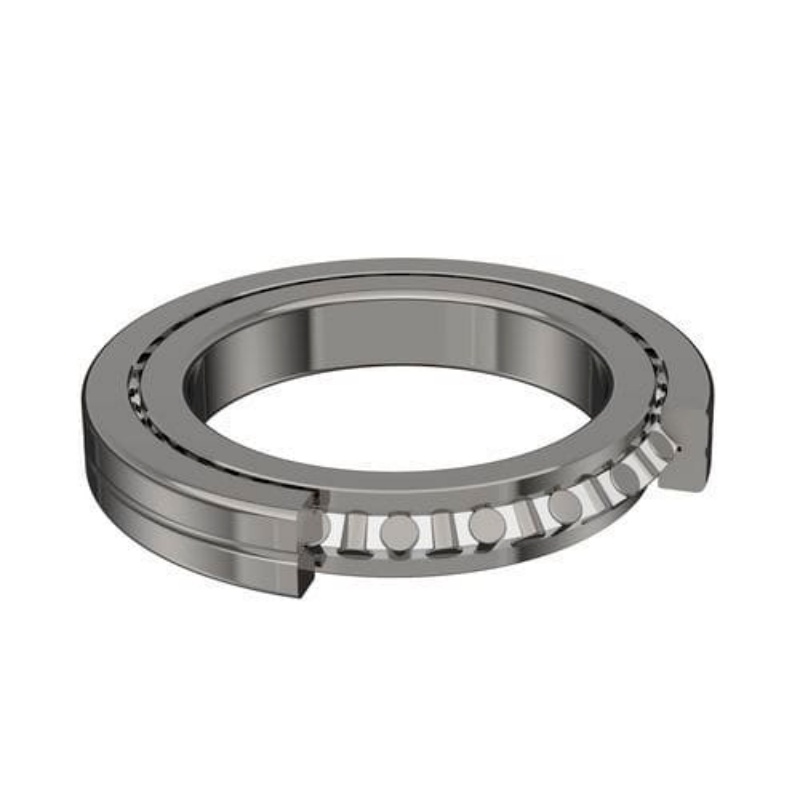
Crossed Roller Bearings (First Choice for Rotary Main Joints)
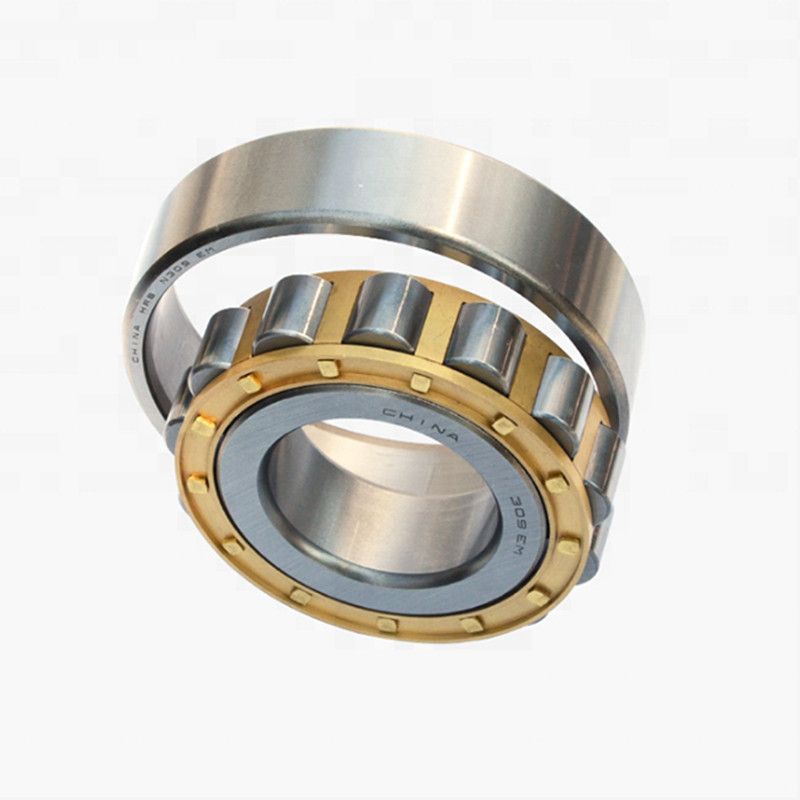
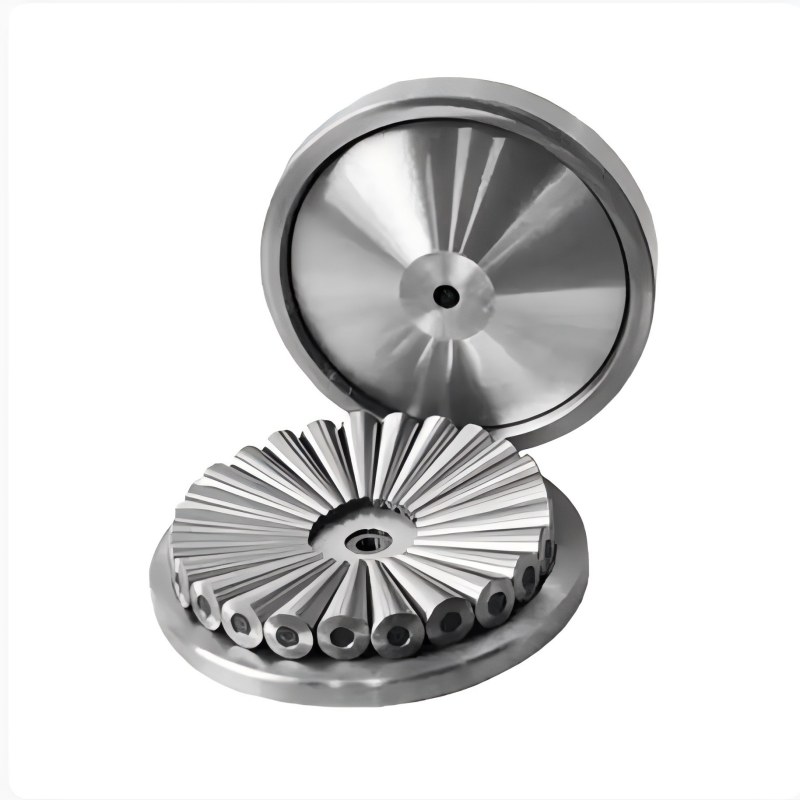
Structural Features: Rollers arranged at 90° cross arrangement, single bearing handles radial + axial + overturning moment, zero backlash, ultra-high rigidity.
Typical Series: RU, CRBH, RB, RA, SXU .
Application Scenarios: Humanoid robot shoulders, elbows, hips, waist main joints; industrial arm upper arm/lower arm joints; precision rotary tables .
2026 Domestic Parameters: Precision up to P4 grade, some companies breakthrough P2; ultra-thin type wall thickness 5mm, axial clearance 0.002–0.005mm .
Selection Key Points: Choose model based on overturning moment,priority pre-tightening adjustable structure; heavy-load joints select high roller count design.
Harmonic Drive Flexible Bearings (The "Heart" of Transmission Core)
Structural Features: Extremely thin outer ring,adaptation wave generator and flexspline high-frequency elastic deformation,bear cyclic alternating stress.
Core Requirements: Material fatigue strength, dimensional accuracy, deformation consistency extremely high, decisive component for reducer life.
Application Scenarios: Core component of harmonic reducers, all rotating joint transmission chain in humanoid robots.
2026 Domestic Parameters: Standard life ≥12,000h, some companies reach 30,000h; deformation consistency error ≤0.003mm.
Selection Key Points: Match size with flexspline/wave generator;priority high fatigue strength bearing steel + special heat treatment solutions.
Angular Contact Ball Bearings
Structural Features: Can bear radial + axial combined loads,paired installation with pre-tightening to eliminate clearance, high speed, high rigidity.
Application Scenarios: Joint motor spindles, knee/elbow high-speed oscillating positions; linear joint screw support ends .
2026 Domestic Parameters: P4 grade precision,after installation in pairs radia lbeat ≤0.001mm; dn value ≥1.5×10⁶.
Selection Key Points: Choose contact angle based on load direction (15°/25°/40°); high-speed scenarios select ceramic hybrid balls to reduce friction .
Four-Point Contact Ball Bearings
Structural Features: Single row bear bidirectional axial loads, reduces bearing count, saves installation space.
Application Scenarios: Humanoid robot linear joints (e.g., knee screw); collaborative robot rotary mechanisms; reducer output item .
2026 Domestic Parameters: Constant section design, axial rigidity 30% higher than traditional structures; zero backlash after preload.
Selection Key Points: Compact space priority constant section series; bidirectional axial load scenarios alternative double-row angular contact.
Deep Groove Ball Bearings
Structural Features: Low friction resistance, high speed, low cost, easy installation and maintenance.
Application Scenarios: Robot end effectors, light joints, sensor brackets; low-load, low-rigidity requirement positions .
Selection Key Points: Prioritize thin-wall type; high-precision scenarios select P5 grade,ordinary scene select P0 grade.
Self-Lubricating Spherical Plain Bearings
Structural Features: Spherical sliding structure + PTFE composite liner, supports large-angle deflection.
Application Scenarios: Humanoid robot ankles, hand joints; outdoor robots, collaborative robots in harsh conditions.
2026 Domestic Parameters: Operating temperature -30°C to 120°C, friction coefficient ≤0.08, maintenance-free cycle ≥5,000h .
Selection Key Points: Suited for multi-directional motion needs;joint area with linkage structure used together .
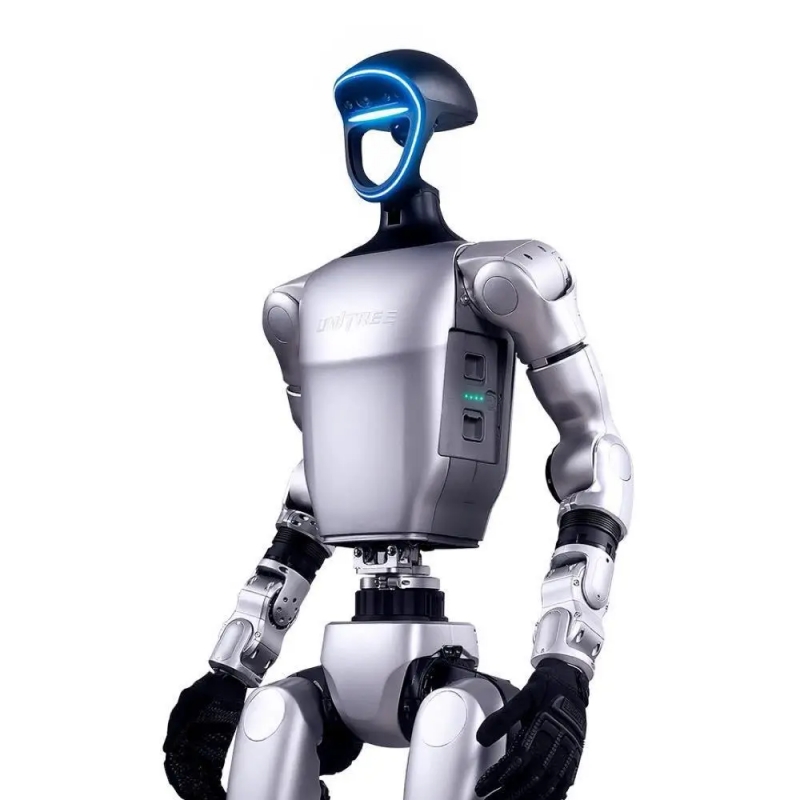
Taking a single humanoid robot (70+ bearing configuration) as an example, the selection of core parts is as follows :
Selection | Core Indicators | Humanoid Robot / | Selection Impact |
Precision | P4/P2 (Rotary), | Main joints P4 and above, | Determines end-effector |
Rigidity & | Zero backlash / | Crossed roller rigidity 3–4× | Impact resistance, |
Spatial | Thin-wall ratio, | Main joint wall thickness ≤5mm, | Fits compact |
Load | Radial / Axial / | Flexible bearings withstand | Matches the force |
Life & | Rated life, | Flexible bearing ≥12,000h, | Determines maintenance |
Friction & | Low friction torque, | High-speed joints | Adapts to motor high speed & |
Core Breakthrough Points
Precision: Domestic crossed roller bearing precision reaches 0.005mm, approaching international levels; some companies achieve P2 grade small-batch supply.
Materials: High-performance bearing steel + nano-coatings, enhancing wear and corrosion resistance; ceramic hybrid ball bearings gradually scalable application .
Process: Laser precision machining, intelligent heat treatment universal, bearing life improved by 20%–30%.
Practical Selection Recommendations
Scenario-Based Prioritization: Main joints prioritize crossed roller bearings, transmission chains prioritize flexible bearings, high-speed parts prioritize angular contact ball bearings .
Localization Substitution: Medium-low load joints can use domestic P4 grade crossed roller bearings; harmonic drive flexible bearings it is recommended to verify first domestic leading companies' products.
Preload & Clearance: All precision joint bearings must apply preload to eliminate backlash; adjust preload force based on load magnitude,avoid over-preload causing heat generation .
Customization Needs: Special joints in humanoid robots can adopt constant section thin-wall design + built-in torque measurement function to improve control accuracy .
For technical specifications, pricing, or custom engineering solutions:
Email: frank@newbeetrans.com
Website: www.newbeetrans.com

 WhatsApp
 sales@newbeetrans.com
 +8615090185276