
NewBee Machinery is a professional machinery parts manufacturer providing high quality precision bearings, high-quality non-standard transmission components, and intelligent CNC equipment and more.
NewBee Machinery is a professional machinery parts manufacturer providing high quality precision bearings, high-quality non-standard transmission components, and intelligent CNC equipment and more.
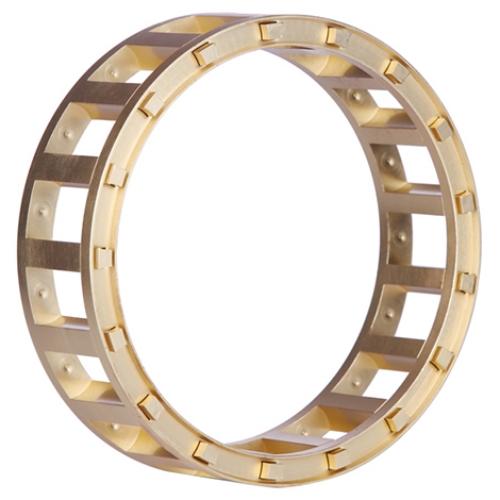
A bearing cage is one of the core components of a bearing. It is used to fix the position of rolling elements,ensure their uniform distribution,and reduce friction. Its design directly affects the operating efficiency and service life of the bearing. NewBee Transmission provides various types of cages, including stamped steel cages,engineering plastic cages,and brass cages.These cages are suitable for deep groove ball bearings,tapered roller bearings, angular contact bearings,etc., and can meet the requirements of complex working conditions such as high speed,high temperature, and high load.
The table below summarizes the main differences between the most common bearing cage types based on material and design:
Cage Type | Material | Key Characteristics | Typical Applications |
Stamped Steel | Low-carbon steel sheet | High strength, lightweight, | Automotive, industrial machinery, |
Machined Brass | Cast or wrought brass | Excellent durability, corrosion resistance, | Heavy-duty industrial equipment, mining, |
Polymer (Plastic) | PA66, PEEK, PTFE, Phenolic | Lightweight, low friction, corrosion-resistant, | Aerospace, medical devices, food processing, |
Full Complement | No cage; maximum rolling elements | Extremely high radial load capacity, | Indexing tables, robotics, presses, |
Specialized Types | Phenolic, Cast Iron, Exotic Alloys | High strength-to-weight ratio (phenolic), | High-speed spindles (phenolic), |
Bearing cages are distinguished by their material properties, manufacturing processes, and design features. Here is a detailed breakdown of the core features for each major type:
Stamped Steel Cages
Manufacturing: Produced by stamping thin steel sheets using high-pressure dies, making them ideal for high-volume production .
Strength & Weight: Offer high strength while remaining lightweight, providing an excellent strength-to-weight ratio for standard applications .
Cost-Effectiveness:They are the most economical option due to the automated manufacturing process .
Surface Treatment:Can be surface treated (e.g., phosphate coating) to further reduce friction and wear in challenging conditions .
Temperature Range:Steel cages can operate at temperatures up to 300°C (570°F) .
Machined Brass Cages
Manufacturing:Precision-machined from solid brass (cast or wrought) using CNC machines, ensuring high accuracy .
Durability & Lubricity:Exceptional durability and toughness, with natural lubricity that reduces friction between the cage and rolling elements .
Corrosion Resistance:Excellent resistance to corrosion, making them suitable for harsh environments .
High-Speed Performance:Perform well at high speeds and elevated temperatures (up to 250°C / 480°F) .
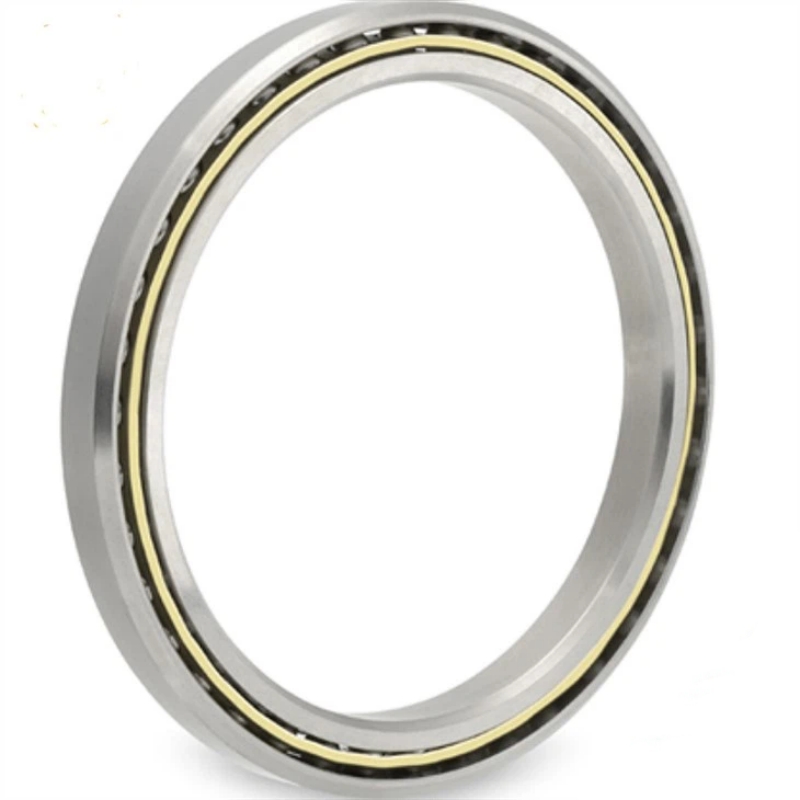
Design Options:Available in various designs, including crown ball pocket and riveted types for larger bearing assemblies .
Polymer (Plastic) Cages
Manufacturing:Produced through injection molding, allowing for complex geometries and high production efficiency .
Lightweight & Low Inertia:Extremely lightweight, reducing centrifugal forces and inertia, which is critical for high-speed applications .
Low Friction & Noise:Inherently low friction coefficients and excellent damping properties result in quieter operation .
Chemical & Corrosion Resistance:Immune to rust and resistant to many chemicals, making them ideal for wet or corrosive environments .
Lubrication Properties:Some polymers (like phenolic) can absorb lubricants, acting as reservoirs, while others offer self-lubricating properties .
Material Variations:
PA66 (Nylon):Most common, good balance of strength and elasticity, economical. Suitable for temperatures below 100°C-120°C, but not for vacuum as it outgasses .
PEEK (Polyetheretherketone):Superior chemical resistance, high-temperature capability (up to 200°C), and high wear resistance. Suitable for demanding applications like hybrid bearings .
PTFE (Polytetrafluoroethylene):Excellent chemical resistance, hydrophobic, insulating, and non-magnetic. However, lower load-bearing capacity .
Phenolic:Lightweight, strong, very low friction, ideal for high-speed applications like super-precision spindles .
Full Complement Bearings (No Cage)
Design: Eliminates the cage entirely to maximize the number of rolling elements within the bearing .
Load Capacity:Provides the highest possible radial load-carrying capacity for a given bearing size .
Speed Limitation:Not suitable for high speeds due to friction and heat generation from rolling element contact. Best for low-speed, oscillating, or heavy-load applications .
Guidance:Rolling elements guide each other, which can lead to increased wear and torque over time .
The choice of cage type is dictated by the specific demands of the application. Here are the primary applications for each major cage type:
Stamped Steel Cages
Automotive Industry:Widely used in engines, transmissions, wheel hubs, and differentials where cost efficiency and durability are crucial .
Industrial Machinery: Common in general-purpose gearboxes, pumps, and electric motors (0.5 kW to 500 kW) operating under moderate loads and speeds .
Household Appliances: Found in washing machines, fans, and power tools where sealed, maintenance-free operation is required .
Machined Brass Cages
Heavy-Duty Industrial Equipment:Essential in mining equipment, crushers, and large gearboxes where high loads and shock resistance are required .
Precision Machinery:Used in aerospace systems, turbines, and high-speed machine tool spindles requiring excellent durability and high-speed performance .
Marine Applications:Suitable for propeller shafts and offshore equipment due to excellent corrosion resistance in saltwater environments .
Polymer (Plastic) Cages
Aerospace:Used in flight control actuators and auxiliary power units where lightweight and high-speed capabilities are critical .
Medical Devices & Food Processing:Ideal for equipment requiring corrosion resistance, low noise, and compatibility with sterilization processes .
High-Speed Spindles:Phenolic cages are the standard choice for super-precision ball bearings in high-speed machining centers .
Chemical Processing:PEEK cages are used in pumps and mixers handling aggressive chemicals .
Clean/Ultra-High Vacuum Environments:PEEK cages are preferred due to low particle generation and minimal outgassing .
Full Complement Bearings
Robotics & Indexing Tables:Used in applications with slow, precise oscillating movements and high load requirements .
Heavy Machinery:Found in cranes, presses, and mining equipment where maximum load capacity is needed at low rotational speeds .
Wind Turbines:Sometimes used in pitch and yaw systems for their high load capacity in slow-turning applications.
Price of Bearing Cages
The cost of bearing cages varies significantly based on material, manufacturing complexity, and precision grade. Since cages are integral to bearings, their price is reflected in the overall bearing cost. Key influencing factors are as follows:
Material Cost:
Stamped Steel:Lowest cost option. Standard low-carbon steel sheet is inexpensive, and stamping is a high-volume, low-cost process .
Polymer (PA66):Low to moderate cost. Injection molding is efficient for mass production, but specialized polymers like PEEK are significantly more expensive .
Machined Brass:High cost. Solid brass material is expensive, and CNC machining is a slower, more labor-intensive process than stamping or molding .
Specialized Materials:Phenolic, cast iron, and exotic alloys (e.g., beryllium copper, Vespel®) command premium prices due to material cost and complex machining requirements .
Manufacturing Complexity:
Simple stamped designs are the most economical.
Injection-molded polymer cages offer cost efficiency at scale but require expensive molds .
Machined cages (brass, phenolic) require precision CNC equipment and have higher per-unit costs, especially for complex geometries .
Riveted two-piece designs (RJ type) cost more than simple crown cages due to additional assembly steps .
Precision Grade:
Higher precision grades (P4/P5) require tighter tolerances and more stringent quality control, increasing manufacturing costs regardless of material.
Super-precision bearings with phenolic cages for machine tool spindles command significantly higher prices than standard industrial bearings.
Order Quantity:
Bulk orders (≥1,000 pieces) of stamped steel or molded polymer cages qualify for significant quantity discounts.
Small-batch orders of machined brass cages for specialized equipment incur higher unit costs due to setup and programming time.
Selecting the optimal bearing cage requires a comprehensive evaluation of the operating conditions and performance requirements. Purchasers should consider the following key factors:
Operating Speed:For high-speed applications (e.g., machine tool spindles), choose lightweight cages with low inertia such as phenolic, PEEK, or machined brass . For moderate speeds, stamped steel or PA66 polymer cages are suitable .
Load Conditions:For heavy loads and shock loads, select high-strength cages like machined brass or stamped steel . For extreme radial loads at low speeds, consider full complement bearings (no cage) .
Operating Temperature:Standard PA66 polymer cages are limited to 100°C-120°C . For higher temperatures (up to 250°C), choose brass cages . For the highest temperatures (up to 300°C), select steel cages . PEEK can operate up to 200°C .
Environmental Conditions:
Corrosive Environments:Choose brass, stainless steel, or chemically resistant polymers like PEEK or PTFE .
Vacuum/Semiconductor:Select low-outgassing materials like PEEK. Avoid PA66/Nylon as it outgasses .
Ammonia Environments:Avoid brass cages; use machined steel or stainless steel cages instead .
Wet/Humid Conditions:Polymer cages excel as they do not rust .
Lubrication Requirements:For applications with marginal lubrication, consider cages with natural lubricity (brass, PTFE) or those that can absorb lubricants (phenolic) . Some polymer cages can operate with minimal lubrication .
Noise & Vibration:For low-noise applications (e.g., medical devices, electric vehicles), polymer cages offer excellent damping properties and reduce running torque fluctuations .
Bearing Type & Assembly:Some bearing types require specific cage designs. For example, snap-type cages (crown cages) are used where assembly requires snapping the cage into place from one side .
Cost-Effectiveness Balance:For non-critical, standard applications, stamped steel or molded PA66 cages offer the best balance of performance and cost. For demanding applications, the higher cost of brass or specialized polymer cages is justified by extended service life and reliability .
LUOYANG NEW BEE TRANSMISSION TECHNOLOGY CO., LTD. is a professional manufacturer of high-precision bearings for many kinds of industry. With advanced manufacturing technology and strict quality control, we produce bearings equipped with a wide variety of cage types to meet diverse application requirements. Our comprehensive product range and customization services ensure that we can provide the optimal bearing solution for your specific needs.
Comprehensive Cage Options in Our Bearings:
Our standard bearing product lines incorporate various cage types to suit different performance requirements:
Stamped Steel Cages:Available in our standard industrial bearing series for automotive, electric motor, and general machinery applications. These cages provide cost-effective, durable solutions for moderate-speed, moderate-load conditions.
Machined Brass Cages:Featured in our heavy-duty bearing series for mining, construction, and metallurgical equipment. These cages offer exceptional durability and performance under high loads and in harsh environments.
Polymer Cages (PA66, PEEK, Phenolic):Incorporated into our precision bearings for aerospace, medical, and high-speed spindle applications. These lightweight cages enable superior high-speed performance and low noise operation.
Custom Cage Designs:For specialized applications, we can engineer bearings with custom cage geometries and materials to meet unique performance requirements.
Advanced Production & Testing Capabilities:
Our manufacturing facility is equipped with internationally advanced CNC precision grinding machines, integral automatic heat treatment lines, and high-precision roller sorting equipment. We implement strict 100% inspection throughout the production process, from raw material spectral analysis to finished product load capacity, precision, and wear resistance testing. This ensures that every bearing, regardless of cage type, meets the highest quality standards .
Professional Customization Services:
Our R&D team consists of senior engineers with over 15 years of experience in bearing design, providing one-stop customized solutions. We can tailor bearing cage selections to your specific requirements:
Custom cage material selection for extreme temperatures, corrosive environments, or vacuum applications.
Precision lubrication integration with cage design for optimal performance.
Private labeling and custom packaging for system integrators and equipment manufacturers.
Reliable Quality Assurance:
All our products comply with ISO9001 quality management system standards and international bearing standards (ISO 355). Our 24/7 technical support team offers on-site installation guidance and rapid response to quality inquiries. For product defect-related issues, we provide free replacement and maintenance services to ensure uninterrupted customer production.
If you are seeking a reliable partner for high-performance bearing solutions with the optimal cage design for your application, please contact LUOYANG NEW BEE TRANSMISSION TECHNOLOGY CO., LTD. for professional technical support and customization services.
For technical specifications, pricing, or custom engineering solutions:
Email: frank@newbeetrans.com
Website: www.newbeetrans.com


 WhatsApp
 sales@newbeetrans.com
 +8615090185276