
NewBee Machinery is a professional machinery parts manufacturer providing high quality precision bearings, high-quality non-standard transmission components, and intelligent CNC equipment and more.
NewBee Machinery is a professional machinery parts manufacturer providing high quality precision bearings, high-quality non-standard transmission components, and intelligent CNC equipment and more.
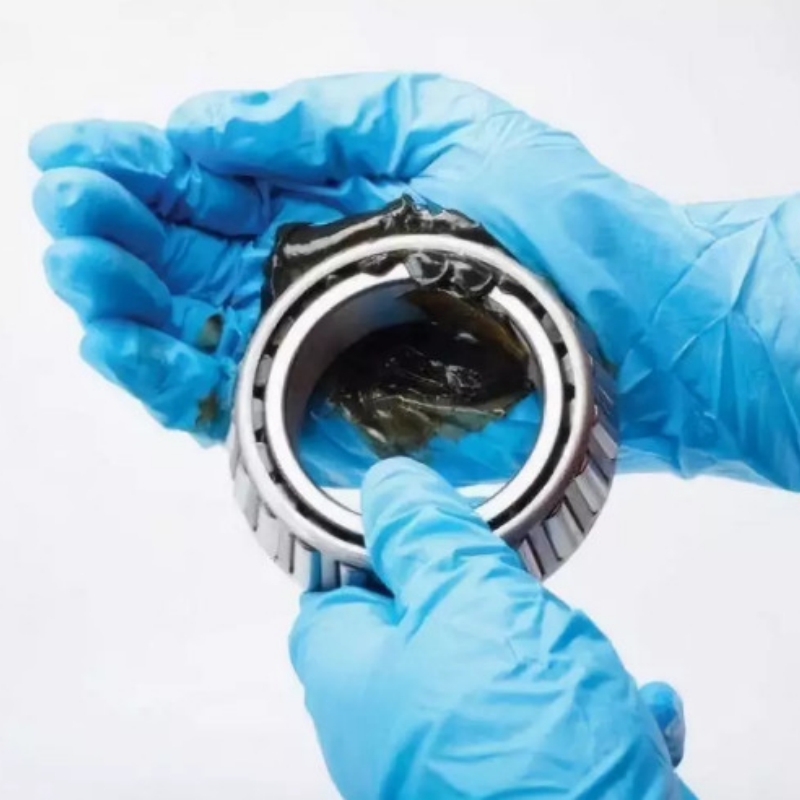
Bearing lubrication is the application of oil or grease between moving, contacting surfaces to reduce friction, minimize wear, and dissipate heat. It forms a protective film that prevents metal-to-metal contact, protects against corrosion, and seals out contaminants. Proper lubrication is crucial, as 50-80% of bearing failures are due to improper lubrication.
Selecting the correct lubrication method is critical for bearing performance and lifespan. The primary differences between Grease, Oil, Solid, and Gas lubrication lie in their operating principles, performance characteristics, and application suitability. The key distinctions are as follows:
Principle & State: Grease uses a semi-solid thickener (soap-based) to hold oil in place, acting as a sealant. Oil uses a liquid film that requires constant circulation or replenishment to separate surfaces.
Key Difference: Grease prioritizes simplicity and containment, making it ideal for sealed-for-life applications. Oil prioritizes cooling and high-speed capability, making it essential for systems with significant heat generation.
Performance Trade-off: Grease offers lower maintenance but has higher initial friction torque and poor cooling. Oil offers superior cooling and is suitable for higher speeds but requires complex pumps, filters, and seals.
Application Contrast: Grease is chosen for standard electric motors and general machinery (moderate speed/load). Oil is mandatory for high-speed turbine spindles and heavy-loaded gearboxes where heat removal is critical.
Principle & State: Oil relies on the viscosity of a liquid to create a hydrodynamic wedge. Gas (usually air) relies on the compressibility of a gas to create a thin film.
Key Difference: Oil can support extremely high loads due to its viscosity. Gas lubrication offers the lowest friction in the world but has very limited load-carrying capacity.
Performance Trade-off: Oil systems have physical contact during start/stop (mixed friction) and generate heat. Gas systems run with virtually no friction or heat generation but require extremely precise manufacturing tolerances.
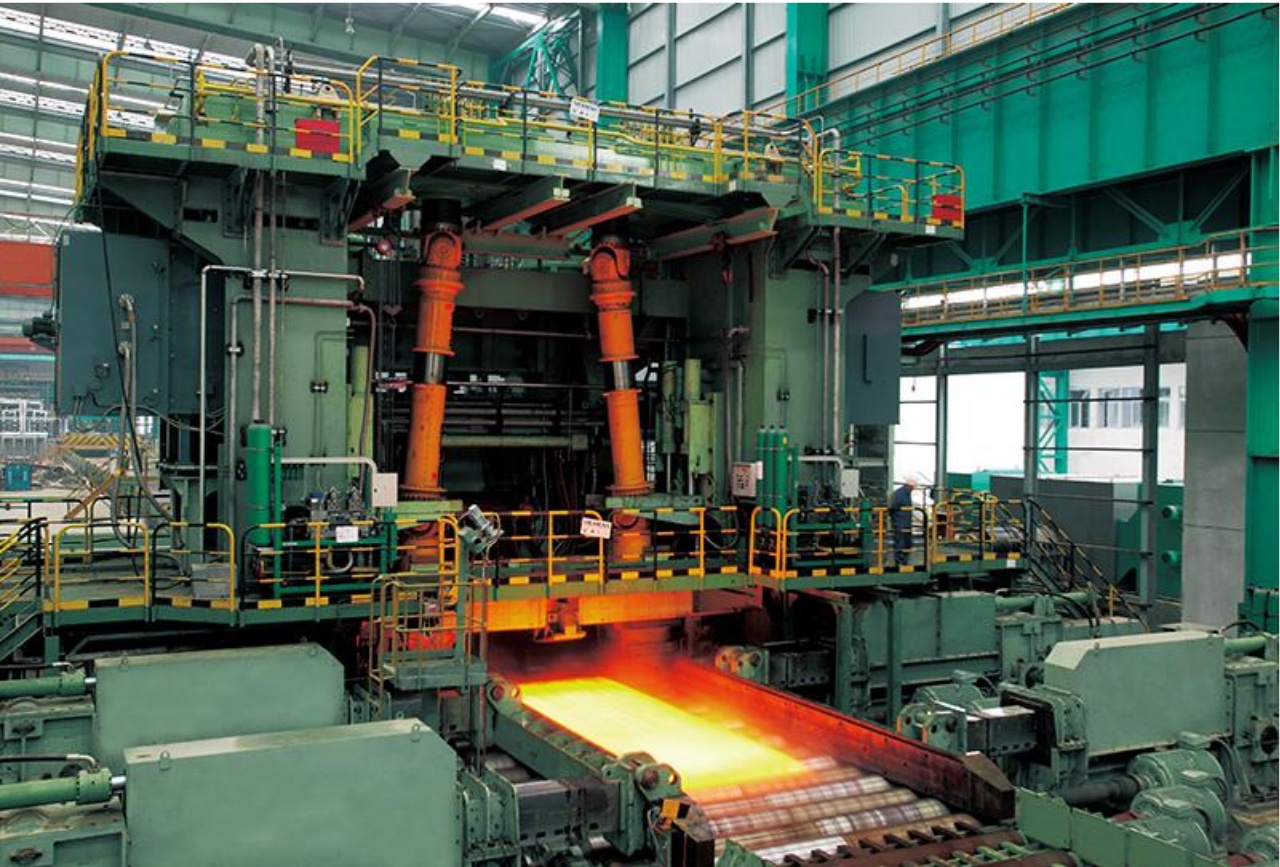
Application Contrast: Oil is used in heavy-load scenarios like rolling mills. Gas is reserved for ultra-high-speed, precision applications like dental drills or PCB drilling spindles where minimal friction is paramount.
Principle & State: Solid lubrication uses a bonded coating (e.g., graphite, MoS2) that shears easily. Grease relies on a reservoir of oil bleeding into the contact zone.
Key Difference: Solid lubricants do not migrate, leak, or evaporate. Grease can degrade, leak past seals, or dry out over time.
Performance Trade-off: Solids operate in a vacuum or extreme heat where liquids/semi-solids fail, but they have a finite operational life and cannot handle continuous high-speed operation. Grease can be replenished for long life but has strict temperature limits.
Application Contrast: Solid lubrication is essential in semiconductor vacuum chambers or space satellites. Grease is the standard choice for automotive and industrial applications in normal atmospheric conditions.
Principle & State: Oil-Air uses a compressed air stream to transport minute, precise amounts of oil along the raceway. Traditional oil lubrication (oil bath or circulation) submerges or floods the bearing with oil.
Key Difference: Oil-Air uses minimal oil (micro-quantities) and high-velocity air for cooling, preventing churning. Traditional oil systems often create "oil churning" losses at high speeds.
Performance Trade-off: Oil-Air offers the best balance of high-speed capability and lubrication but requires sophisticated control units. Traditional oil systems are simpler but generate more heat due to internal friction at high speeds.
Application Contrast: Oil-Air is the standard for high-speed machine tool spindles. Traditional oil circulation is common in large, slow-speed heavy machinery like cement kilns.
Summary of Differences:
Feature | Grease Lubrication | Oil Lubrication | Solid Lubrication | Gas / Oil-Air Lubrication |
State of Lubricant | Semi-solid | Liquid | Solid Coating | Gas or Air + Micro Oil |
Cooling Ability | Poor | Excellent | None | Good (Air cools) |
Speed Capability | Low to Medium | Medium to High | Low | Ultra-High |
Load Capacity | Low to Medium | High | Low | Low (Gas) / High (Oil-Air) |
System Complexity | Low (Simple) | High (Pumps, Filters) | Low (Coating) | Very High (Precision Controllers) |
Environmental Suitability | Standard Industrial | Standard Industrial | Vacuum / Extreme Temp | Clean / High-Speed Precision |
Grease lubrication is the most widely used method due to its simplicity and reliability. It is the preferred choice across numerous industries for standard operating conditions:
Electric Motors & Generators: Used in motor bearings (0.5 kW to 500 kW) where sealed, maintenance-free operation is required for 5-10 years. Standard lithium-based or polyurea greases provide long life at speeds up to 3,000-3,600 rpm.
Automotive Components: Applied to wheel bearings, alternators, and auxiliary systems. It withstands vibration, shock loads, and varying temperatures (-40°C to +120°C) in chassis and drivetrain applications.
Agricultural Machinery: Used in tractor PTO shafts, balers, and harvesters operating in dusty, wet environments. High-viscosity greases with tackiness agents resist washout and contamination.
Construction Equipment: Applied to pivot points, bushings, and bearings in excavators and loaders. Extreme-pressure (EP) greases with molybdenum disulfide (MoS2) provide protection under heavy shock loads and slow oscillation.
Conveyor Systems: Used in bulk material handling (mining, ports) where centralized lubrication systems distribute grease to hundreds of bearing points. It provides sealing against dust and corrosion.
Household Appliances: Found in washing machines, fans, and power tools, where sealed, low-noise operation is required for the product's lifetime.
3. Price of Grease Lubrication (System & Maintenance Costs)
The price of grease lubrication encompasses the cost of the lubricant itself, the application system, and the long-term maintenance. Key influencing factors are as follows:
Lubricant Type & Additives: Standard lithium complex grease costs $2-$5 per kg. Synthetic greases (PAO, ester-based) for high-temperature or extended-life applications cost $8-$20 per kg. Specialized greases with solid additives (graphite, ceramic) can exceed $30 per kg.
Application Method:
Manual Greasing: Lowest equipment cost (grease gun: $20-$100) but high labor cost. Suitable for small facilities with 50-100 lubrication points.
Centralized Lubrication Systems: Moderate to high initial investment ($2,000-$20,000+ depending on pump type and number of points). Reduces labor costs, ensures precise dosing, and extends bearing life, offering significant ROI in large plants.
Relubrication Interval: Bearings requiring frequent manual greasing (e.g., weekly) incur higher cumulative labor costs. Bearings with extended intervals (e.g., 6-12 months) or sealed-for-life bearings reduce operational expenditure (OPEX).
Dispensing Tools: Precision grease meters and automated fillers for manufacturing lines cost $500-$5,000, ensuring accurate fill volumes (e.g., 30%-40% of free space) to prevent over-greasing.
Disposal & Environmental Costs: While minimal compared to oil, used grease must be disposed of properly. Biodegradable greases (vegetable-oil based) are available at a 50%-100% price premium for environmentally sensitive areas (e.g., near waterways, forestry equipment).
LUOYANG NEW BEE TRANSMISSION TECHNOLOGY CO., LTD. is a professional manufacturer of high-precision bearings for many kinds of industry. We understand that standard lubricants cannot meet the demands of every unique application. Therefore, we offer comprehensive OEM and customization services for lubrication solutions integrated with our high-performance bearings:
Custom Lubricant Selection: We match the precise grease or oil formulation to your specific operating conditions, including extreme temperature ranges (-70°C to +350°C), vacuum compatibility, food-grade (NSF/H1) requirements, and resistance to aggressive chemicals.
Precision Lubrication Filling: For sealed and shielded bearings, we utilize automated, clean-room filling equipment to apply exact lubricant quantities (measured in milligrams), ensuring optimal performance, minimizing churning losses, and preventing premature failure due to under or over-lubrication.
Material Customization Integration: We combine specialized lubrication with bearing material modifications (stainless steel, Si₃N₄ ceramic, SiC ceramic) to create comprehensive solutions for extreme environments, such as semiconductor vacuum chambers or cryogenic processing equipment.
Specialized Modifications: We provide advanced treatments for unique scenarios, including:
Vacuum-Specific Lubrication: Low-outgassing oils and greases for space applications and high-vacuum chambers.
Enhanced Sealing: Combining custom lubricants with advanced seal designs to retain lubrication in highly contaminated environments (mines, quarries).
Conductive Lubricants: To prevent electrostatic discharge (ESD) damage in electric motor bearings used with variable frequency drives.
Precision Calibration: For applications requiring nano-level positioning accuracy and low vibration, we calibrate the bearing assembly with the specific lubricant to ensure consistent running torque and dynamic behavior.
Private Labeling and Custom Packaging: For system integrators and equipment manufacturers, we offer private labeling on bearing packages and custom packaging solutions, including pre-lubricated, ready-to-mount bearing sets.
If you are seeking a reliable partner for high-performance bearing solutions with customized lubrication for semiconductor equipment, heavy machinery, or precision spindles, please contact LUOYANG NEW BEE TRANSMISSION TECHNOLOGY CO., LTD. for professional technical support and customization services.



 WhatsApp
 sales@newbeetrans.com
 +8615090185276