
NewBee Machinery is a professional machinery parts manufacturer providing high quality precision bearings, high-quality non-standard transmission components, and intelligent CNC equipment and more.
NewBee Machinery is a professional machinery parts manufacturer providing high quality precision bearings, high-quality non-standard transmission components, and intelligent CNC equipment and more.
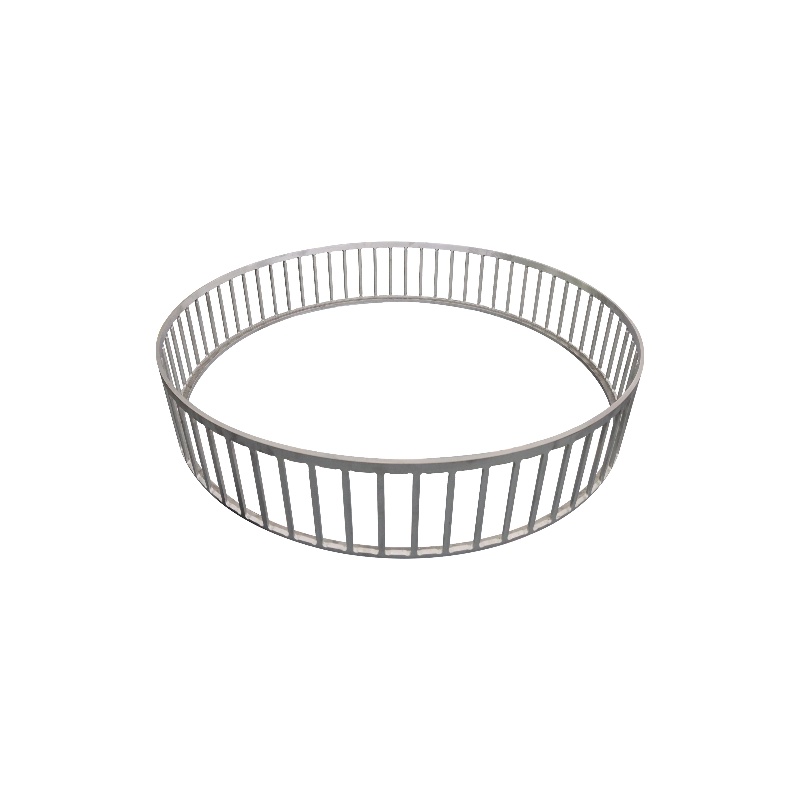
Wind turbine main shaft bearing cages are the internal structural components that space,isolate,and guide the rolling elements inside a turbine's primary low-speed shaft bearing.Three mainstream material options are available:high-strength steel for heavy-load scenarios,advanced aluminum alloy for lightweight requirements,and engineering polymer for lubrication-free operating conditions.Dimensional accuracy reaches ±0.002 mm,50 percent tighter than general ISO standards.Precision forging plus full CNC machining delivers smooth surface finish for stable roller movement.
Key performance benchmarks include L10 fatigue life up to 180000 hours,1200-hour salt-spray corrosion resistance,and maximum DN value reaching 1200000 mm×rpm.Standard models require 8-10-week lead time.Custom-developed cages for retrofit wind turbine units take 12-14 weeks.Laser scanning measurement service is supported for matching existing installed bearing dimensions.
Proprietary surface plasticization and nano-ceramic coating treatments enhance anti-corrosion performance.Cryogenic treatment eliminates internal material stress and restricts cage deformation below 0.01 mm within-40 ℃ to +80 ℃ wide temperature fluctuation range,which is essential for wind farm long-term unattended operation.
Mechanical Strength & Fatigue Resistance
Wind turbine main shaft bearings are subjected to severe static,dynamic,and transient shock loads driven by turbulent wind gusts and rotor blade imbalances.
Impact & Fatigue Resistance:Cages must endure extreme cyclic stress without fracturing or permanently deforming.
Weight & Inertia:Heavy metal cages experience high inertial forces during rapid changes in wind direction or sudden rotational acceleration/deceleration.Lightweight cages reduce inertial forces on the rollers during variable-speed operations.
Cage Material Selection
The choice of cage material dictates the mechanical,thermal,and tribological behavior of the bearing under operational stress:
Machined Brass Cages
Pros:Excellent strength,superior emergency sliding/tribological properties,high resistance to wear,and good heat dissipation.
Cons:Higher weight increases centrifugal/inertial forces; higher raw material cost.
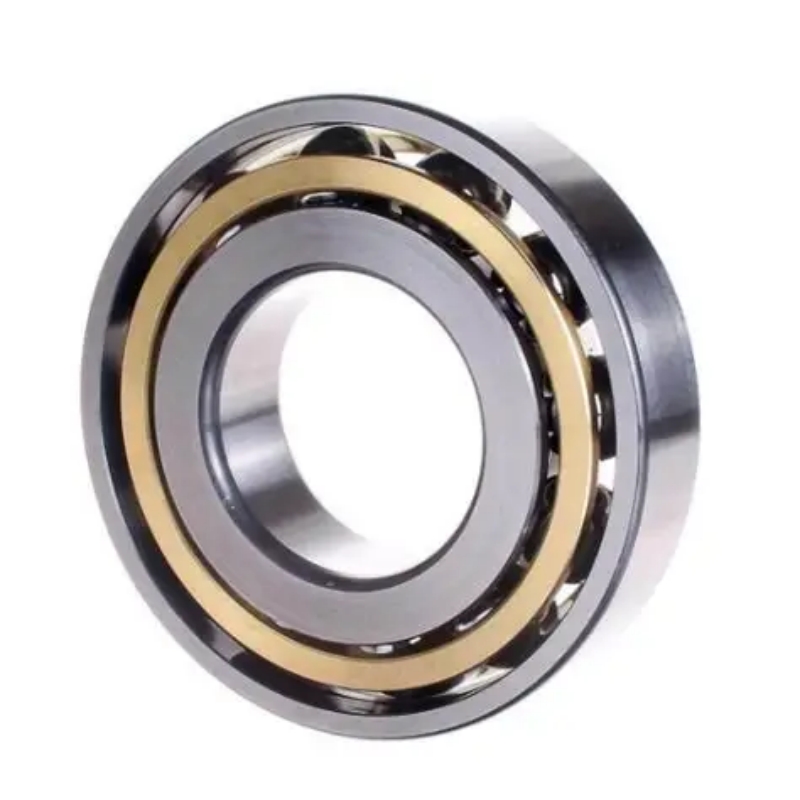
Application:A traditional industry standard for large main shaft spherical roller bearings and tapered roller bearings .
Machined Steel Cages
Pros:Very high tensile strength and structural rigidity under extreme impact loads.
Cons:Heavier mass,lower self-lubricating ability if oil film breaks down.
High-Performance Polymer Cages
Pros:Extremely lightweight,low coefficient of friction,high elasticity,and superior resistance to wear under poor lubrication conditions.
Cons:Lower thermal threshold compared to metal; potential sensitivity to specialized synthetic lubricants.
Application:Increasingly favored in modern direct-drive and high-capacity turbines due to reduced inertia and lower friction.
Lubrication & Friction Performance
Main shaft bearings rotate at relatively low speeds,making it difficult to maintain a full elastohydrodynamic oil film.
Low-Speed/Boundary Lubrication Capability:When grease film thins out during idling or low wind speeds,the cage pocket material must have low frictional resistance and low wear rates to avoid scuffing or cage pocket galling.
Grease Pocket Architecture:The pocket design should allow grease to flow efficiently and maintain a continuous lubricant reservoir near the roller raceways.
Operational Environment & Thermal Conditions
Extreme Temperature Range:Turbines operate in diverse climates,from arctic cold-climate sites to hot desert conditions.Cages must avoid brittle failure in extreme cold while retaining structural stability at elevated operating temperatures.
Offshore Corrosion & Salt Spray:For offshore applications,cages must resist moisture and chemical degradation caused by salt spray or harsh synthetic lubricant additives.Brass and PEEK provide superior corrosion resistance over uncoated steel.
Guidance Mechanism & Alignment Flexibility
Main shaft bearings frequently experience angular misalignment and shaft deflection under high wind moments.
Ring-Guided vs.Roller-Guided Cages:Ring-guided cages offer smoother motion and improved guidance in heavy-load scenarios,whereas roller-guided cages depend on roller motion and require careful pocket tolerances.
Misalignment Tolerance:The cage must accommodate micro-deflections without pinching or jamming the rolling elements.Elastic materials or segmented cage designs handle misalignment better than rigid single-piece metal cages.
Main Shaft Bearings
Operating Environment:Low rotational speed,extreme heavy radial and axial loads,transient wind gust shocks,and frequent direction changes.
Cage Function:Cages separate large spherical,tapered,or cylindrical rollers.They prevent roller skidding during low-speed boundary lubrication and absorb severe inertia forces during emergency stops.
Gearbox Bearings
Operating Environment:Moderate to very high rotational speeds under heavy continuous torque.
Cage Function
Planet Stage:Requires high-strength pin-type or machined brass cages to handle severe centrifugal forces as planet gears orbit the sun gear.
High-Speed Stage:Demands lightweight polymer or brass cages to minimize heat generation,friction,and cage slip under rapid speed changes.
Yaw & Pitch Drive Bearings
Operating Environment:Slow,intermittent,oscillating movement under massive overturning moment loads caused by aerodynamics against the rotor blades.
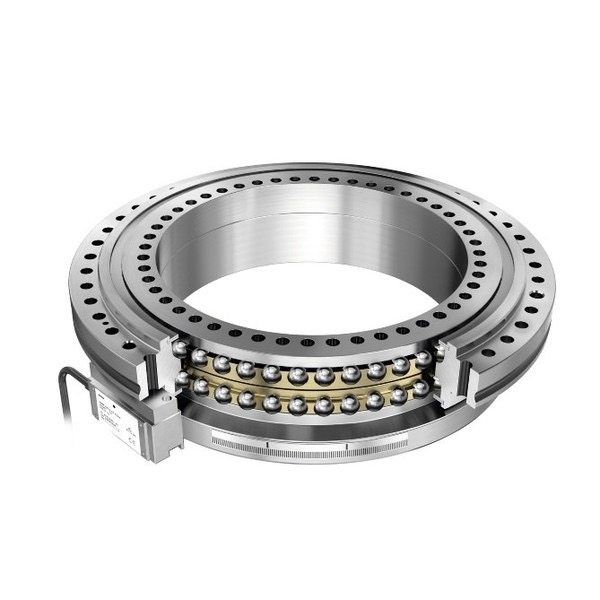
Cage/Spacer Function:Segmented polymer cages or individual spacer blocks keep large steel balls/rollers evenly distributed around multi-meter slewing rings,preventing roller crowding,uneven ring wear,and high friction during directional alignment.
Generator Bearings
Operating Environment:High rotational speed,continuous operation,high temperatures,and exposure to stray electrical currents.
Cage Function:Reinforced glass-fiber polymer cages or insulated brass cages provide low vibration,low noise,and high thermal stability while preventing electrical erosion (fluting) on rolling elements.
Newbeetrans is a professional manufacturer supplying reliable wind turbine bearing cages for wind turbine main shaft and other wind-power key transmission components.Complete production workflow covers independent research and development,precision forging,CNC machining,special surface treatment and dedicated wind-power load simulation testing laboratories under ISO 9001 quality management certification.
Stock and Customization Capacity
Mainstream standard wind-turbine bearing cage models are available for order.Our technical team delivers comprehensive custom services including laser scanning reverse measurement,non-standard dimension adjustment,special material selection,anti-corrosion surface optimization and pocket-geometry modification for retrofit wind-farm projects.
Strict Full-Process Quality Assurance
Every incoming raw-material batch completes spectral and metallurgical inspection.Each finished wind-turbine bearing cage undergoes one hundred percent inspection including dimensional tolerance check,salt-spray corrosion test,fatigue simulation assessment and surface quality verification.Material certificates and SGS third-party inspection reports can be provided on client request.
Advanced Production Infrastructure
Special large-size precision forging equipment,CNC machining centers,cryogenic treatment stations and multi-condition environmental test benches are deployed in-house.MES production-management system realizes full-batch traceability to guarantee consistent high-precision product performance.
Global Sales and Technical Support
We cooperate with worldwide sea-freight and air-freight service providers and support FOB,CIP,DAP and other standard international trade terms.Our engineers provide remote model-selection consultation,material recommendation and installation guidance for global wind-turbine OEMs and wind-farm operators.
For technical specifications,pricing,or custom bearing cage solutions:
Email:paul@newbeetrans.com
Website:www.newbeetrans.com
 WhatsApp
 sales@newbeetrans.com
 +8615090185276