
NewBee Machinery is a professional machinery parts manufacturer providing high quality precision bearings, high-quality non-standard transmission components, and intelligent CNC equipment and more.
NewBee Machinery is a professional machinery parts manufacturer providing high quality precision bearings, high-quality non-standard transmission components, and intelligent CNC equipment and more.
Bearing break-in is the initial,controlled operating period for new or refurbished bearings,designed to properly distribute lubricant,settle components,and seat surfaces,which minimizes premature failure and optimizes longevity.
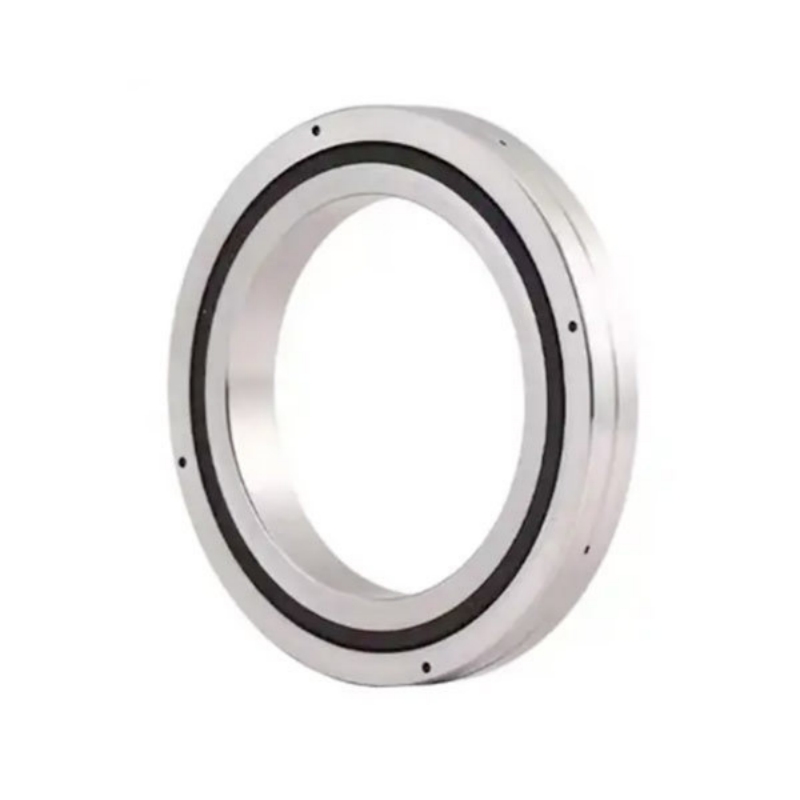
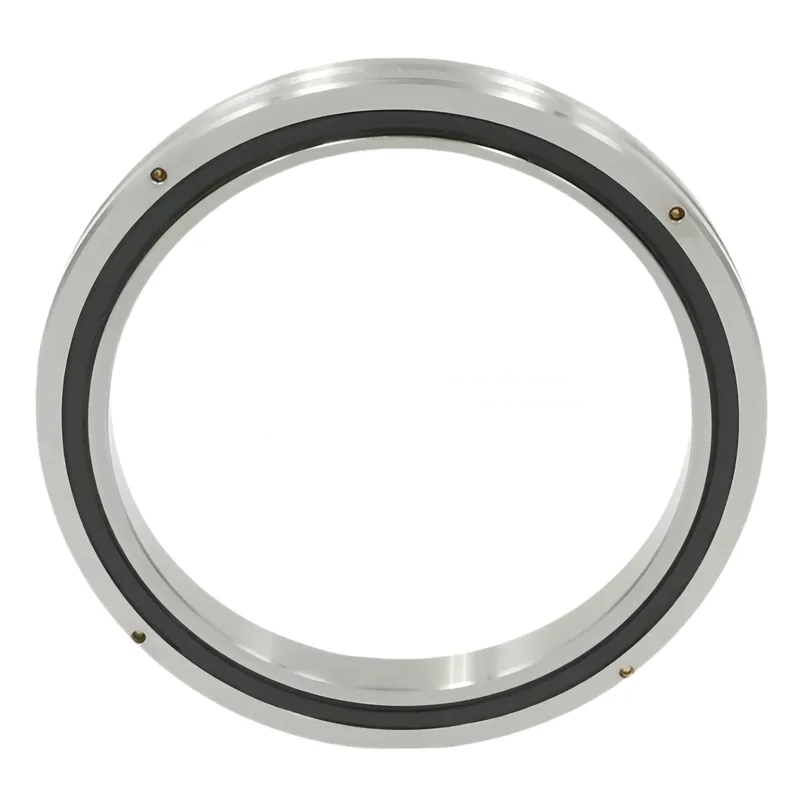
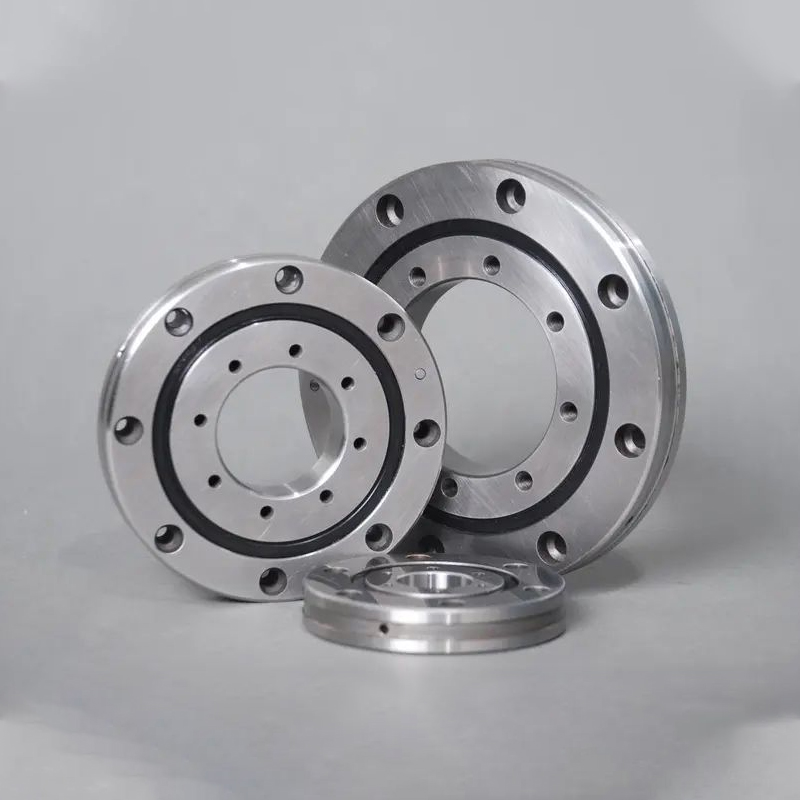
It often involves running machinery,such as precision spindles,at low speeds while monitoring for temperature increases.As a professional precision bearing manufacturer with 20 years of experience,NewBeetrans formulates targeted break-in standards for its crossed roller bearings,YRT bearings,thin-section bearings and other series products.These bearings are widely used in CNC machine tools,semiconductors,aerospace,satellite communications,mining machinery and steel plants,and standardized break-in operation is particularly critical.
Bearing break-in (also known as running-in) is a controlled low-speed and low-load operation process for new bearings after installation.It aims to gently polish the microscopic roughness of bearing raceways and rolling elements,form a uniform and stable lubricating oil film,and adjust the internal radial clearance to the optimal working state.This process can avoid surface scratches,seizure or abnormal wear caused by direct high-speed and heavy-load operation of new bearings.For NewBee's high-precision bearings (ABEC 7/9,P4/P2 grade),sufficient break-in is a prerequisite to maintain nanometer-level rotational accuracy and long-term stable performance.
The break-in time of bearings is affected by a variety of factors,and NewBee provides targeted break-in schemes based on these key variables.Bearing type and precision grade: High-precision products such as YRT bearings and RB crossed roller bearings require longer break-in time due to higher accuracy requirements,while ordinary standard bearings require shorter time.Material characteristics: Bearings made of NewBee's high-quality GCr15 bearing steel need standard break-in time; ceramic bearings have smoother surfaces and relatively shorter break-in cycles.Lubrication status: Adequate and suitable lubricant can shorten the break-in time,while insufficient or inappropriate lubrication will prolong the break-in process and even lead to failure.Assembly fit: Bearings installed with interference fit need longer break-in to adapt to the matching state with shaft and housing,compared with clearance fit bearings.Application working conditions: High-speed and high-precision equipment (semiconductor wafer handling,CNC spindles) need sufficient break-in; low-speed and heavy-load machinery (mining equipment) need moderate break-in time.
Standardized break-in is crucial to exert the optimal performance of bearings.For NewBee's precision bearings used in CNC machine tools and semiconductor equipment,complete break-in can stabilize rotational accuracy,reduce vibration and low-frequency noise.Sufficient break-in cooperates with reasonable radial clearance to accommodate thermal expansion,prevent overheating and seizure,reduce friction and wear,and effectively extend service life.NewBee's energy-saving cases in steel plants show that bearings with correct break-in can reduce equipment maintenance frequency.On the contrary,insufficient break-in will lead to poor lubrication and unstable operation,which cannot fully exert the performance of bearings.
The break-in operation shall be carried out in accordance with international standards and NewBee's professional guidelines.
Low-speed operation: First run at 30%-50% of the rated speed for 1-2 hours without load.
Gradual loading: Slowly increase the load to 50% of the rated load and run for 2-3 hours,then transition to full-load operation.
Temperature monitoring: Stop break-in when the bearing operating temperature is stable and no longer rises.
Precision application customization: For aerospace and satellite communication precision bearings,NewBee's professional team uses special instruments to monitor and guide the break-in process to ensure compliance with ISO standards.
Skipping or improper break-in will cause serious damage to bearings and equipment.Insufficient break-in leads to rapid wear of raceways and rolling elements,reduces bearing service life,and affects the rotation accuracy of high-end equipment.It will also cause abnormal temperature rise,deteriorate lubricant,and lead to premature bearing failure.For heavy machinery such as mining equipment,improper break-in may even cause sudden equipment breakdown.NewBee provides comprehensive on-site technical support,including break-in operation guidance and parameter adjustment,to help customers avoid these risks.Bearing break-in is an indispensable key link to ensure bearing performance.NewBeetrans always provides detailed break-in procedures with its precision bearings,helping global industrial customers maximize bearing service life and operational stability.
For technical specifications,pricing,or custom engineering solutions:
Email:paul@newbeetrans.com
Website:www.newbeetrans.com
 WhatsApp
 sales@newbeetrans.com
 +8615090185276