
NewBee Machinery is a professional machinery parts manufacturer providing high quality precision bearings, high-quality non-standard transmission components, and intelligent CNC equipment and more.
NewBee Machinery is a professional machinery parts manufacturer providing high quality precision bearings, high-quality non-standard transmission components, and intelligent CNC equipment and more.
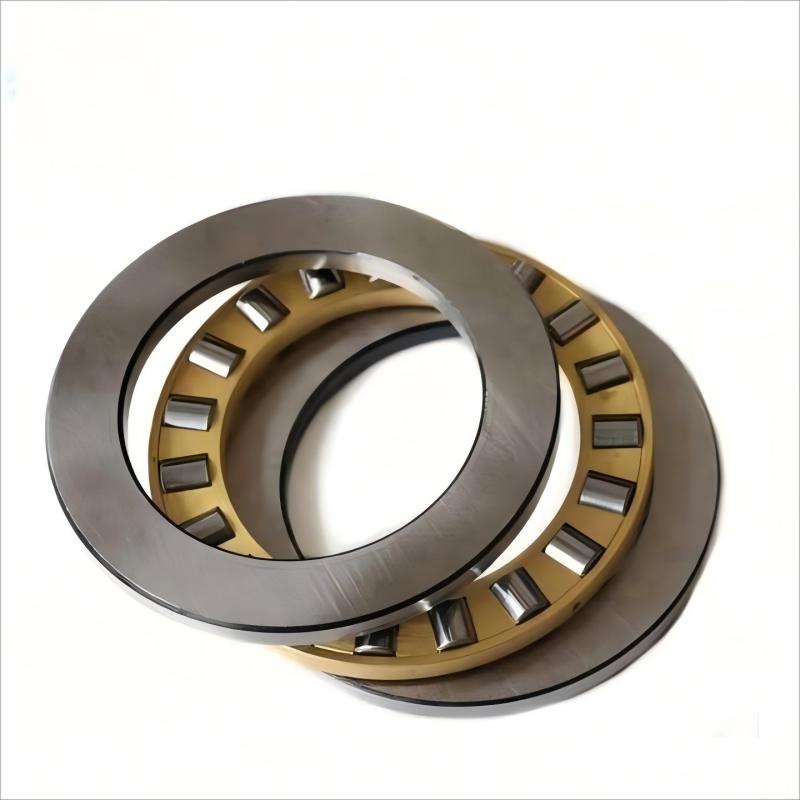
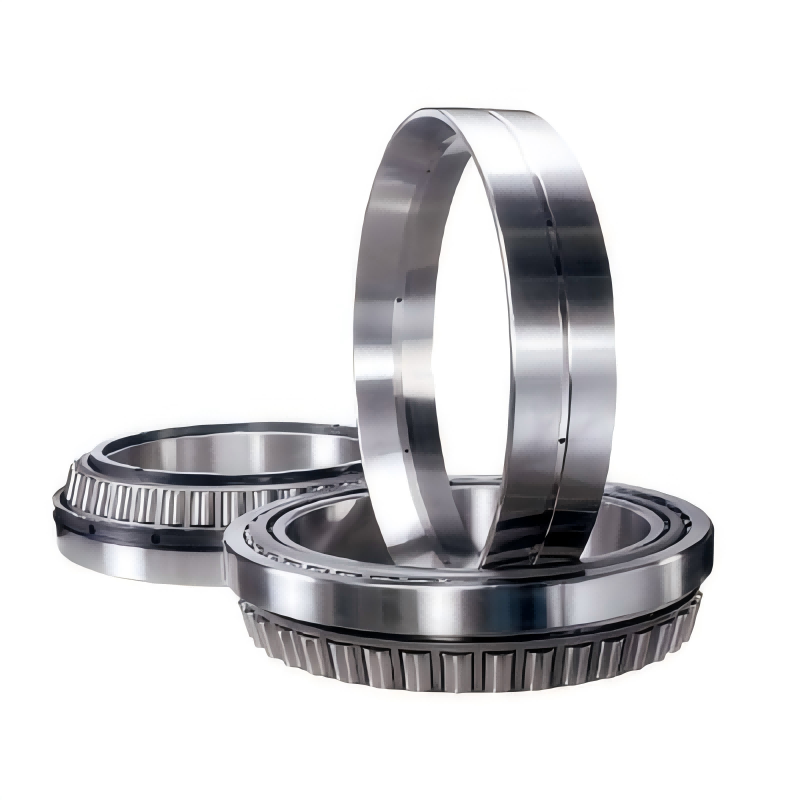
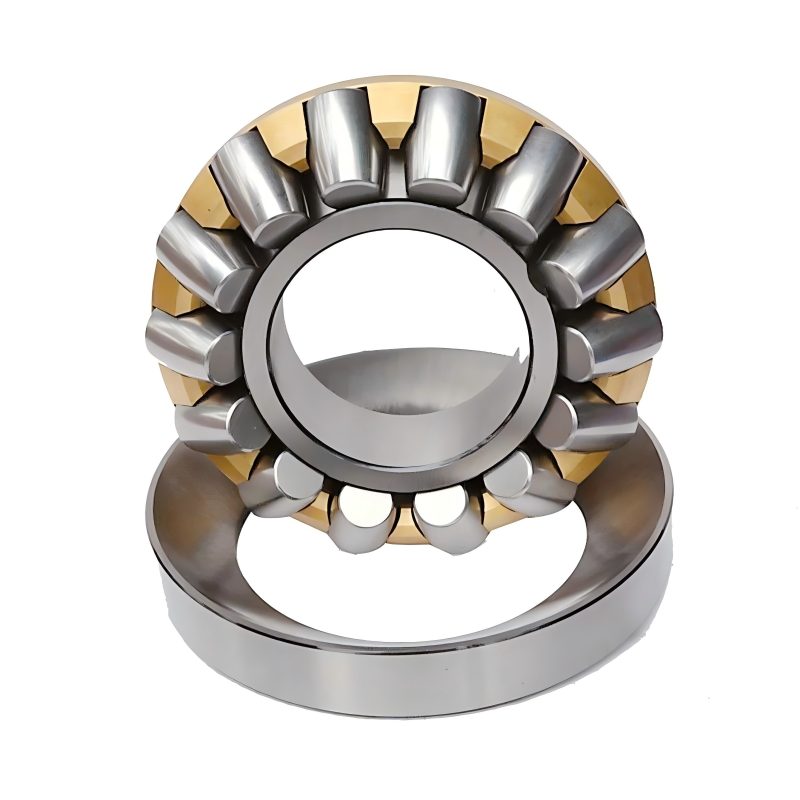
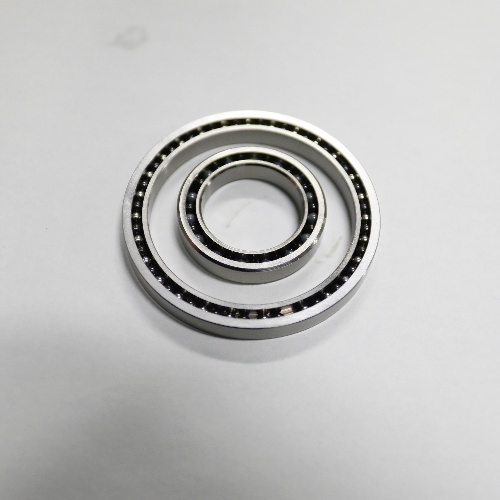
A thrust roller bearing is a specialized rotary bearing designed to support heavy axial loads (forces parallel to the rotating shaft's axis) and allow smooth, low-friction rotation, unlike radial bearings which handle perpendicular forces, featuring rollers (cylindrical, tapered, or spherical) for high load capacity, often used in heavy machinery, automotive drivelines, and pumps. They come in various forms, including cylindrical, spherical (self-aligning), and needle roller types, each suited for different load and misalignment conditions, with separable components like washers and cages for easy assembly.
Thrust Roller Bearings stand out in heavy-duty industrial applications due to their targeted structural design and industry-leading axial load performance, with core features as follows:
Ultra-High Axial Load-Bearing Capacity: Adopting line contact (cylindrical type) or optimized point contact (spherical type) design between rollers and raceways, the bearing delivers axial load capacity 3-5 times higher than thrust ball bearings of the same size. The spherical roller thrust variant achieves a maximum axial load rating of up to 8000 kN, while the cylindrical type reaches up to 5000 kN, perfectly adapting to the ultra-heavy axial load requirements of large industrial equipment. The full-complement design option further enhances load capacity for low-speed, extreme heavy-load working conditions.
Self-Aligning Compensation Capability (Spherical Type): Spherical roller thrust bearings feature a spherical roller profile matched with a spherical raceway on the housing washer, providing ±2°-3° self-aligning capability. This design can automatically compensate for installation misalignment, shaft deflection, and eccentric loads, avoiding local stress concentration, reducing assembly accuracy requirements, and significantly improving operational stability under heavy load and fluctuating working conditions.
High-Precision Axial Positioning (Cylindrical Type): Cylindrical roller thrust bearings use parallel cylindrical rollers with flat raceways, delivering exceptional axial positioning accuracy. Available in precision classes from P0 to P4, the P4-class ultra-precision variant achieves axial runout ≤0.005 mm, meeting the micron-level axial positioning requirements of precision machine tools, automation equipment, and high-precision transmission systems.
Long Service Life & Stable Performance: Bearing rings and rollers are primarily manufactured from GCr15 high-carbon chromium steel, with SUS440C stainless steel available for corrosive environments. Advanced surface hardening treatment and precision polishing of roller end faces (surface roughness Ra≤0.08μm) minimize friction and wear, extending fatigue life by 40% compared with conventional thrust bearings. This ensures reliable, long-term continuous operation even under sustained heavy axial loads.
Wide Customization & Working Condition Adaptability: With flexible sealing, lubrication, and material configurations, the bearing adapts to diverse complex environments including clean, dusty, high-temperature, and corrosive conditions. It supports full-range customization: non-standard size adjustment of shaft and housing washers, self-aligning angle optimization for spherical types, corrosion-resistant material modification, seal type upgrades, and special lubrication solutions for extreme temperatures, to meet unique application requirements.
High Cost-Effectiveness for Import Substitution: The technical specifications of the bearing fully match international imported series, with consistent performance and more stable supply capacity. It reduces procurement costs by 20%-30% compared with imported brands, making it an ideal cost-effective option for domestic substitution in heavy industrial applications.
Leveraging its exceptional axial load capacity, structural flexibility, and harsh environment adaptability, Thrust Roller Bearings are widely used across 10 key industrial fields, becoming an indispensable core component in heavy-duty rotating machinery:
Heavy-Duty Gearboxes & Transmissions: Applied to industrial gear reducers, marine gear systems, and wind turbine gearboxes, they reliably support the large axial forces generated by helical and bevel gear meshing, maintaining stable transmission performance and reducing vibration and noise in the drive system.
Construction Machinery: Installed in cranes, excavators, wheel loaders, and slewing equipment, these bearings handle heavy axial loads and impact shocks during lifting, slewing, and excavation operations, delivering robust performance in harsh outdoor construction environments.
Mining & Quarry Equipment: A core component in crushers, grinding mills, belt conveyors, and mining screening equipment, they are designed to operate under extreme axial loads, severe vibration, and dusty, contaminated working environments, reducing maintenance frequency and downtime in mining operations.
Steel & Metallurgical Machinery: Widely used in rolling mill screw-down systems, continuous casting machines, and steel processing lines, they provide reliable axial load support and positioning accuracy in the high-load, high-temperature production processes of the steel and metallurgical industry, ensuring rolling dimensional accuracy and equipment durability.
Marine & Offshore Equipment: Applied to ship propeller shafts, offshore platform winches, and thrusters, thrust roller bearings absorb the propeller thrust and heavy axial forces generated during marine navigation and operation. Corrosion-resistant material options and sealed designs ensure reliable performance in humid, salt-spray marine environments.
Wind Energy Equipment: Used in wind turbine main shafts, pitch and yaw systems, they support the large axial loads from wind impact and rotor weight, delivering excellent fatigue resistance and long service life to meet the 20-year design life requirements of onshore and offshore wind farms.
Automotive & Transportation: Equipped in heavy-duty vehicle transmissions, railway axle boxes, and traction equipment, they are used in compact design scenarios with high thrust loads, ensuring stable operation under long-term vibration and variable load conditions in the transportation industry.
Pumps & Compressors: Suitable for vertical pumps, large screw compressors, and turbo compressors, thrust roller bearings carry the weight of vertical shafts and axial process loads from fluid compression and delivery, maintaining shaft stability and efficient equipment operation over continuous running cycles.
Industrial Presses & Extruders: A critical component in screw presses, metal forging presses, and plastic extrusion machines, their ultra-high thrust capacity is essential for axial force transmission in high-pressure forming processes, ensuring consistent extrusion and pressing accuracy.
Oil & Gas Equipment: Applied to drilling rigs, mud pumps, and wellhead equipment, they are designed to handle extreme axial loads and continuous operation in the harsh, high-pressure, and corrosive environments of oil and gas exploration and production.
The price of Thrust Roller Bearings is determined by multiple interrelated factors, primarily including product specifications, material quality, structural design, and order requirements, with detailed influencing factors as follows:
Size & Load Rating: Size is the core price driver, with standard models covering an inner diameter range of 127–700 mm, outer diameter range of 150–800 mm, and total thickness range of 48–270 mm. Larger bearings consume significantly more raw material and require more complex precision machining and heat treatment processes, leading to higher production costs. Bearings with ultra-high load ratings (above 20000 kN) require thicker raceways, larger diameter rollers, and reinforced structural design, further increasing the final product price.
Precision Grade: Precision grades are classified as P0, P6, P5, and P4 in ascending order of accuracy, which directly impacts pricing. High-precision P4/P5 grade bearings require stricter multi-stage grinding, 100% dimensional and runout testing, and precision roller sorting processes, with a much higher production rejection rate. As a result, their prices are 40%-70% higher than standard P0 grade bearings, with a more significant price gap for large-size and high-precision positioning models.
Material Selection: Standard GCr15 high-carbon chromium steel offers the best cost performance for general working conditions. Selecting SUS440C stainless steel for corrosion resistance or heat-resistant alloy materials for high-temperature environments will increase raw material costs by 50%-90%, directly driving up the bearing price. Cage material also affects pricing: machined brass cages are more expensive than Nylon 66 or stamped steel cages, with custom high-strength cage materials adding additional costs.
Structural Complexity & Customization: Standard single-direction cylindrical and spherical thrust bearings are the most cost-effective options. Double-direction designs, separable structure optimizations, and custom self-aligning angle adjustments for spherical types require higher machining precision, increasing costs by 15%-30%. Non-standard size customization, special raceway profile design, added lubrication holes/grooves, and integrated sealing structures will add 30%-60% to the price based on the complexity of the customization.
Sealing & Lubrication Configuration: Open-type bearings are the most economical base option. Adding contact rubber seals (2RS/UU) for dust and splash protection increases costs by 15%-30%, while labyrinth seals (ZZ) for heavy-load dusty applications add 10%-20% to the price. Special lubrication solutions, such as high-temperature resistant grease, food-grade lubricant, or circulating oil lubrication designs, will also increase the overall product cost.
Order Quantity & Delivery Time: Bulk orders (≥100 pieces) qualify for a 15%-25% quantity discount, as mass production reduces unit processing costs and material waste. Small-batch orders (≤30 pieces) or urgent orders (delivery within 5 days) incur additional production scheduling, expedited processing, and logistics costs, increasing the unit price by 20%-40%.
To select the optimal Thrust Roller Bearing and ensure long-term stable operation matching the equipment requirements, purchasers should comprehensively evaluate the following key factors:
Working Condition Matching: First, clarify the core working parameters of the equipment, including axial load magnitude and direction, rotational speed, working temperature, installation alignment accuracy, and environmental conditions (dusty, corrosive, humid). For scenarios with installation misalignment, shaft deflection, or eccentric loads, spherical roller thrust bearings with self-aligning capability should be selected; for high-precision axial positioning scenarios with no misalignment, cylindrical roller thrust bearings are the optimal choice. It should also be noted that thrust roller bearings are mainly designed for axial loads, with the spherical type able to bear a small amount of radial load (≤10% of axial load), while the cylindrical type can hardly bear radial loads, requiring combined use with radial bearings if radial loads are present.
Size & Precision Grade Confirmation: Determine the inner diameter of the shaft washer, outer diameter of the housing washer, and total thickness of the bearing strictly according to the equipment design drawings, and select the appropriate precision grade. For general heavy-duty equipment such as mining conveyors and standard gearboxes, P0/P6 grade bearings can meet the requirements; for precision equipment such as machine tool spindles, extrusion machines, and high-precision pumps, P5/P4 high-precision bearings should be selected to ensure axial positioning accuracy and operational stability.
Material & Cage Selection: For standard room temperature, clean working conditions, GCr15 high-carbon chromium steel and stamped steel/Nylon 66 cages are sufficient and cost-effective. For high-temperature, corrosive, or heavy impact environments, select SUS440C stainless steel or heat-resistant alloy materials. Cage selection should also match working conditions: Nylon 66 cages for medium-high speed operation, machined brass cages for heavy load and impact conditions, and stamped steel cages for cost-sensitive general applications.
Load & Speed Capacity Verification: Calculate the actual static and dynamic axial loads of the equipment, and select bearings with basic load ratings 1.2–1.5 times higher than the actual working loads to ensure sufficient safety margin for shock loads. At the same time, verify that the limiting speed of the selected bearing is higher than the maximum operating speed of the equipment, to avoid overheating, cage damage, and premature failure caused by overspeed operation.
Supplier Qualification & After-Sales Service Assessment: Prioritize professional bearing suppliers with mature production capacity and industry experience, such as NewBee Transmission. Verify the supplier’s ISO9001 quality certification, advanced production equipment (CNC precision grinding machines, heat treatment lines), and complete product testing reports. In addition, fully understand the supplier’s after-sales service capabilities, including warranty period, on-site installation guidance, and 24/7 technical support, to avoid after-sales troubles.
Cost-Effectiveness Balance: Avoid blind pursuit of ultra-high precision and premium materials that exceed actual working requirements. Select products that fully match the actual working conditions according to the importance of the equipment and operating requirements. Domestic brands such as NewBee Transmission provide technical specifications fully compatible with imported brands (e.g., SKF, Timken), with a cost advantage of 20%-30%, ensuring stable supply while significantly reducing procurement costs.
NewBee Transmission is a professional manufacturer and supplier of high-quality Thrust Roller Bearings, focusing on providing reliable heavy-load axial bearing solutions for global customers in the steel, metallurgy, mining, wind energy, construction machinery, and marine industries. With advanced manufacturing technology, strict full-process quality control, and customer-centric professional services, NewBee Transmission has become a trusted long-term partner for many large industrial enterprises worldwide.
Comprehensive Product Range: The standard Thrust Roller Bearing series covers inner diameters from 127 mm to 700 mm, outer diameters from 150 mm to 800 mm, and total thickness from 48 mm to 270 mm, with precision grades including P0, P6, P5, and P4. It offers two core product lines: Spherical Roller Thrust Bearings (TTSV/TTSX series) and Cylindrical Roller Thrust Bearings, with open-type and sealed designs, as well as cage-type and full-complement variants, fully meeting the diverse needs of different industrial applications. Non-standard size, material, and structural customization services are also available for special working conditions.
Advanced Manufacturing & Testing Capabilities: The company is equipped with internationally advanced CNC precision grinding machines, integral automatic heat treatment lines, high-precision roller sorting equipment, and a professional bearing testing center. It implements strict 100% inspection throughout the entire production process, from raw material incoming inspection (spectral analysis, metallographic testing) to finished product testing (load capacity, precision, runout, fatigue life), ensuring the consistency, reliability, and stability of every batch of products.
Professional Customization Services: NewBee Transmission has a senior R&D engineering team with more than 15 years of experience in thrust roller bearing design and manufacturing, which can provide one-stop customized solutions according to customers’ specific working conditions and equipment design requirements. Whether it is non-standard size design of shaft and housing washers, self-aligning angle optimization for spherical types, corrosion-resistant material modification, special seal structure design, or custom lubrication solutions, the team can efficiently complete design, sample development, and mass production. The sample development cycle for customized models is only 4–10 weeks, with urgent production support for key projects.
Reliable Quality Assurance & After-Sales Service: All products strictly comply with ISO9001 quality management system standards and international bearing industry standards, with a standard product warranty period of 18 months. The company has a complete after-sales service system, providing 24/7 online technical consultation, on-site installation guidance, and professional maintenance training. For any quality problems caused by the product itself, the company implements free replacement and maintenance services to ensure that customers’ production is not affected.
Efficient Logistics & Global Supply Chain: Relying on intelligent warehousing management and an optimized global supply chain, NewBee Transmission ensures a delivery cycle of 5–12 days for standard in-stock models. The company cooperates with top international logistics partners including DHL and FedEx, and has established overseas warehouses in Europe and North America, achieving fast and efficient delivery to customers around the world, fully supporting customers’ just-in-time production plans.
Proper installation, lubrication, and maintenance are critical to maximizing the service life and ensuring the optimal performance of Thrust Roller Bearings, especially in heavy axial load and harsh working conditions. Key precautions are as follows:
Standardized Installation Operation: Before installation, thoroughly clean the bearing, shaft, and housing bore to remove all burrs, oil stains, welding slag, and other impurities, to avoid raceway and roller wear during operation. Correctly distinguish the shaft washer (tight fit with the shaft) and housing washer (loose fit with the housing bore), and use specialized pressing tools for assembly. Apply force evenly on the washer with interference fit, and strictly prohibit hammering or impact knocking, which will cause raceway deformation, roller damage, and permanent precision loss. For spherical roller thrust bearings, ensure the self-aligning center is aligned with the shaft axis after installation; for cylindrical types, verify the axial runout meets the equipment specifications.
Scientific Lubrication Management: Select the appropriate lubricating grease or oil according to the working temperature, rotational speed, and load conditions. For high-temperature environments (≤150°C), use high-temperature special grease; for medium-high speed operation, use low-viscosity lubricating oil. Open-type bearings require regular lubrication replenishment, with grease replacement every 1000–1800 working hours; sealed bearings should be inspected regularly for grease leakage, with timely seal replacement and grease replenishment if leakage is found. Strictly avoid over-lubrication (which will increase friction and heat generation) or insufficient lubrication (which will cause dry friction and premature bearing failure).
Real-Time Operation Monitoring: During equipment operation, continuously monitor the temperature, vibration, and noise of the bearing in real time. The normal operating temperature of the bearing should be within 30–80°C, with a temperature rise not exceeding 18°C. If the temperature rises sharply or exceeds the limit, it may indicate insufficient lubrication, installation misalignment, or overload, and the equipment should be shut down for inspection immediately. Abnormal vibration or noise may signal roller/raceway wear, cage damage, or foreign matter ingress, requiring timely disassembly and inspection.
Proper Storage & Handling: Store the bearings in a clean, dry, and ventilated environment with a relative humidity of ≤60%, and avoid direct contact with acids, alkalis, and other corrosive substances to prevent rust and corrosion. Bearings should be stored horizontally in their original packaging, and heavy stacking on the bearing packaging is strictly prohibited to prevent washer deformation. During transportation and handling, use shockproof packaging to avoid collision, dropping, or severe vibration, which will damage the bearing’s internal structure and precision.
Regular Inspection & Scheduled Maintenance: Conduct regular disassembly and inspection according to the equipment’s operating cycle and working conditions. Check the wear condition of the raceways and rollers, the integrity of the cage, the condition of the seals, and the remaining lubricant quality during inspection. If abnormal wear, pitting, deformation, or damage is found, replace the bearing in time to avoid secondary damage to the host equipment caused by bearing failure. After inspection and maintenance, thoroughly clean the bearing and related parts, reapply qualified lubricant, and reinstall correctly according to the assembly specifications.
Technical Specifications of Thrust Roller Bearing
Parameter | Specification |
Bearing Type | Thrust Roller Bearing |
Precision Grade | P0, P6, P5, P4 |
Size Range | Inner Diameter: 127–700 mm |
Material | Bearing Rings & Rollers: GCr15 high-carbon chromium steel / SUS440C stainless steel |
Sealing Options | Open Type, Contact Rubber Seals (2RS/UU), Labyrinth Seals (ZZ) |
Customization | Available (size, self-aligning angle, material, cage, seal, lubrication) |
Delivery Cycle | Standard models: 5–12 days; |
For technical specifications, pricing, or custom engineering solutions:
Email: paul@newbeetrans.com
Website: www.newbeetrans.com
 WhatsApp
 sales@newbeetrans.com
 +8615090185276