
NewBee Machinery is a professional machinery parts manufacturer providing high quality precision bearings, high-quality non-standard transmission components, and intelligent CNC equipment and more.
NewBee Machinery is a professional machinery parts manufacturer providing high quality precision bearings, high-quality non-standard transmission components, and intelligent CNC equipment and more.
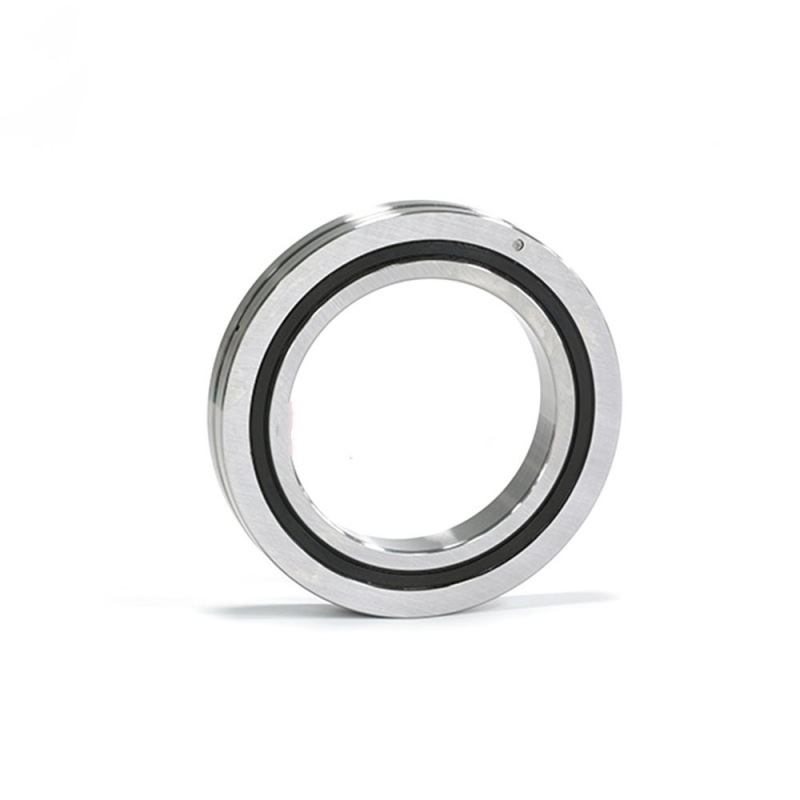
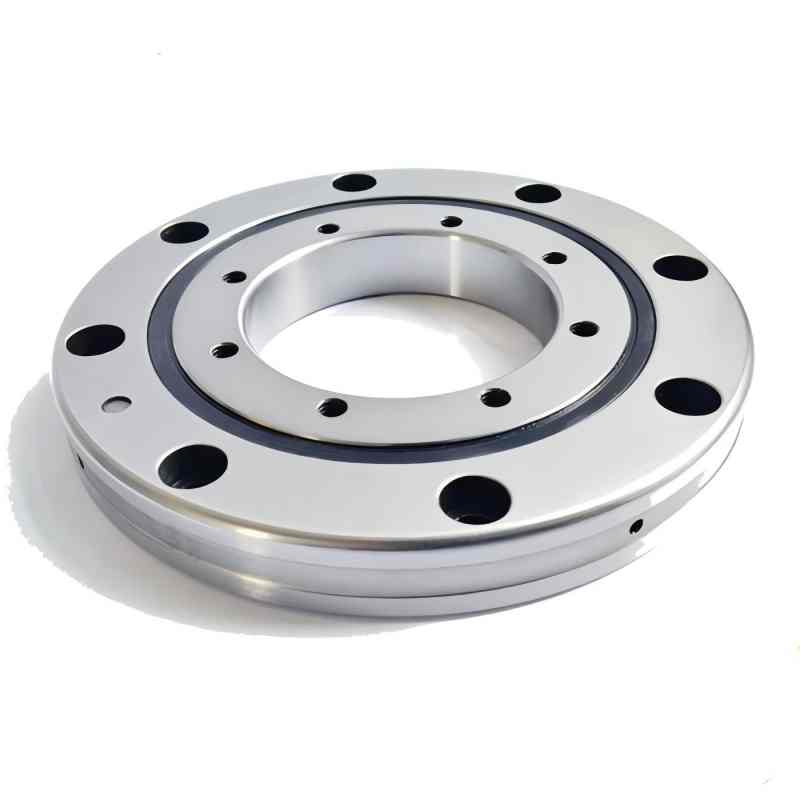
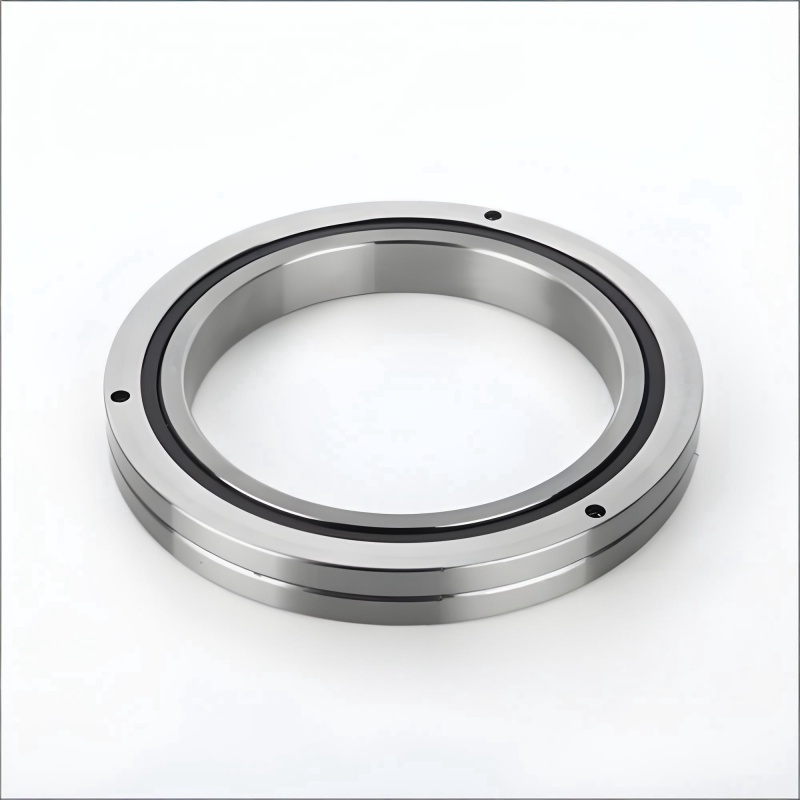
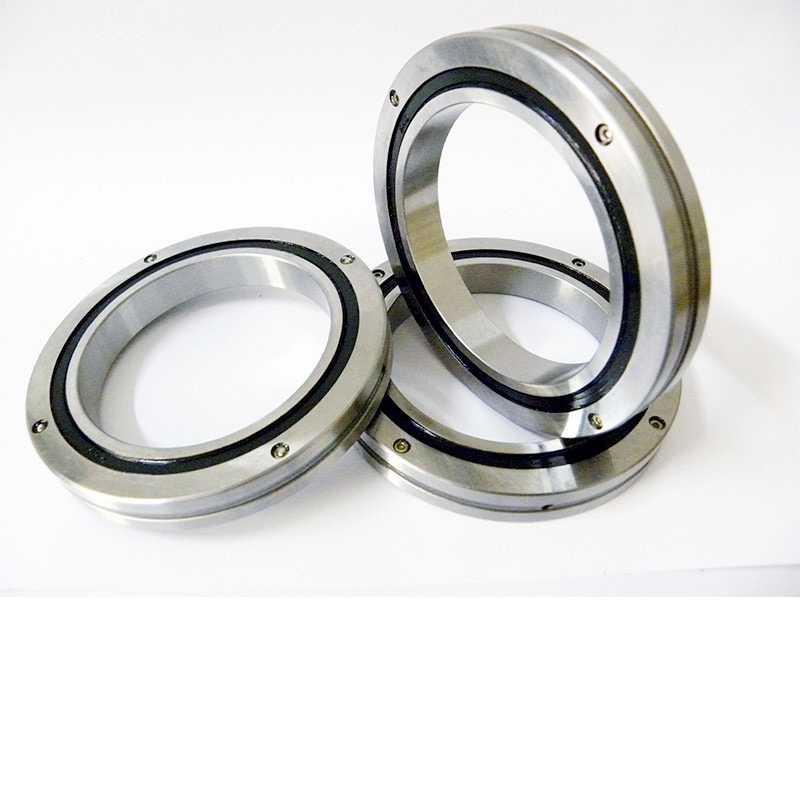
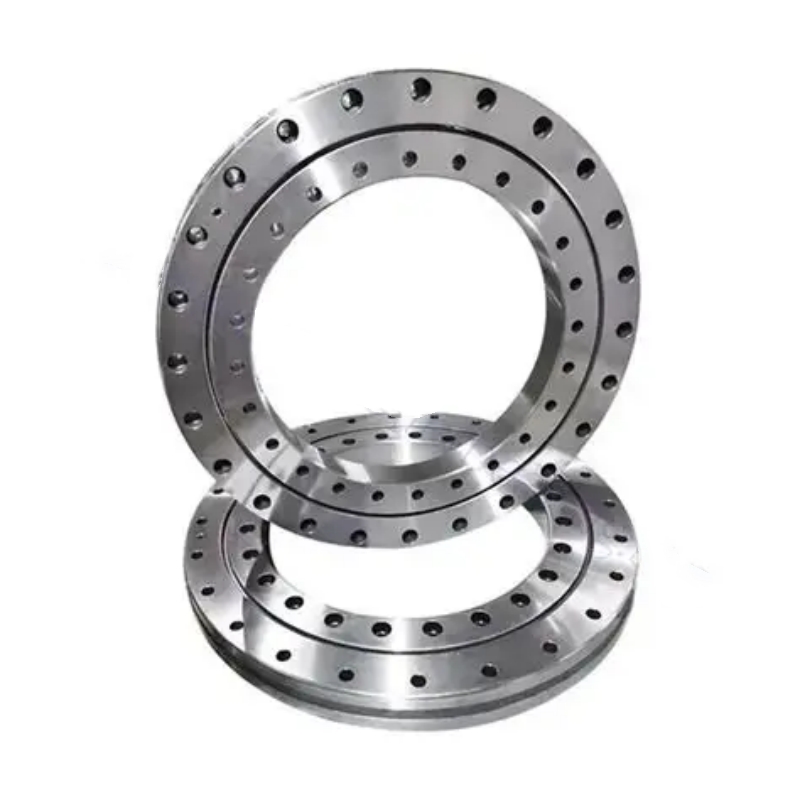
CRBF crossed roller bearings are specifically designed for high-precision, high-speed rotary systems, featuring an integral outer ring, split inner ring, and precision-machined integrated flange with standard mounting holes. The 90° orthogonal "X"-shaped cylindrical rollers enable simultaneous bearing of radial, axial, and moment loads, ensuring excellent stability and rigidity. The flange-integrated design simplifies installation by eliminating the need for additional supports, making them ideal for industrial robots, precision rotary tables, high-speed machining centers, and automation machinery requiring compact structure and reliable high-speed operation.
Integrated flange for easy installation: The outer ring integrates a precision-machined flange with standard mounting holes, eliminating the need for additional flange seats or supports. Direct bolt fixation shortens assembly time by 40% and reduces installation costs.
High-speed adaptability: Optimized roller profile and low-friction cage design (brass or nylon 66) enable maximum speeds of 2800 rpm (grease lubrication) and 3500 rpm (oil lubrication), outperforming conventional crossed roller bearings by 20%-30%.
Superior rigidity and precision: Rollers are crossed at 90° for line contact with raceways, providing 3x higher rigidity than ball bearings. Precision grades include P5, P4, P2, with radial runout ≤0.003 mm (P4 grade) and axial runout ≤0.005 mm, meeting micron-level positioning requirements.
Strong combined load capacity: A single bearing simultaneously bears radial, bidirectional axial, and tilting moment loads, replacing the need for separate radial and thrust bearings, and reducing equipment volume by 30%-50%.
Long service life: Bearing rings and rollers use GCr15 high-carbon chromium steel (HRC 60-62) with surface hardening treatment; roller end faces are precision-polished (Ra≤0.1μm), extending fatigue life by 30% compared to conventional bearings.
Import substitution advantage: Technical indicators (precision, rigidity, speed) meet international standards, directly replacing imported brands such as IKO, with 30%-50% lower procurement costs and more stable supply.
Industrial robotics: Used in robot arm joints (elbow, wrist, shoulder), end-effectors, and harmonic drive supports. The compact flange design fits limited joint space, while high rigidity ensures precise motion control.
Precision rotary tables: Applied in CNC indexing tables, laser processing rotaries, and precision positioning platforms. High precision and rigidity guarantee machining accuracy for workpieces in high-speed cutting scenarios.
Semiconductor equipment: Used in wafer aligners, lithography stages, and inspection actuators. Low friction and stable rotation avoid damaging sensitive semiconductor components, ensuring microfabrication precision.
Medical devices: Integrated into CT/MRI scanning components, surgical robots, and high-precision positioning systems. Compact size, low noise, and repeatable accuracy adapt to medical equipment’s strict requirements.
Aerospace and defense: Used in UAV gimbal systems, radar rotation mechanisms, and satellite targeting optics. Lightweight, high rigidity, and resistance to complex loads meet aerospace reliability standards.
Machine tool attachments: Applied in tool changers, probe heads, and small precision spindles. Rigidity and accuracy improve machining repeatability and reduce equipment operation errors.
Size and load rating: Larger inner diameter (e.g., >100 mm) or higher load capacity (e.g., radial load >100 KN) requires more raw materials and complex processing, increasing costs. Ultra-small sizes (inner diameter <20 mm) also have higher production difficulty and prices.
Precision grade: P2/P4 high-precision bearings are 40%-70% more expensive than P5 grade. Strict grinding, dynamic balance testing, and precision inspection (e.g., laser interferometry) drive up production costs.
Material quality: Bearings made of SUS440C stainless steel (corrosion-resistant) or ceramic rollers are 50%-80% more costly than conventional GCr15 steel. High-temperature alloy materials for extreme environments (≥150°C) further increase prices.
Structural complexity: Customized flange specifications (e.g., special hole diameter, flange thickness) or sealed structures (UU/U contact seals) add processing steps, increasing costs compared to standard open-type bearings.
Customization requirements: Non-standard size customization, hybrid ceramic roller design, or special lubrication solutions (high-temperature/vacuum) increase design and production costs, raising the unit price by 30%-60%.
Order quantity: Bulk orders (≥300 pieces) enjoy 15%-25% quantity discounts; small-batch (≤50 pieces) or urgent orders (delivery within 10 days) incur additional scheduling and logistics costs.
Operating condition matching: Clarify key parameters such as operating speed (≤2800 rpm for grease lubrication), radial/axial load ratio, moment load, working temperature (-40°C to +150°C), and environmental conditions (dust, humidity). Select open-type (high-speed) or sealed-type (complex environments) accordingly.
Size and precision confirmation: Confirm inner/outer diameter, flange specifications, and precision grade based on equipment drawings. For high-speed cutting or semiconductor equipment, prioritize P2/P4 grade; for general automation, P5 grade balances performance and cost.
Material and sealing selection: Choose GCr15 for general conditions, SUS440C for corrosive environments; select UU contact seals for dusty/humid scenarios, and open-type for high-speed clean environments to reduce resistance.
Supplier qualification assessment: Verify the supplier’s production capacity (e.g., CNC grinding machines, precision measuring equipment), quality certifications (ISO 9001), and after-sales service. Prioritize suppliers with CRBF specialized production experience to avoid assembly errors.
Cost-effectiveness balance: Compare technical indicators (rigidity, speed, life) of different suppliers. Domestic brands like NEWBEE Transmission offer comparable performance to imported brands at 30%-50% lower prices, with more flexible customization support.
NEWBEE Transmission (Luoyang New Bee Transmission Co., Ltd.) is a professional supplier of high-quality CRBF crossed roller bearings, committed to providing efficient, cost-effective solutions for global customers. With advanced R&D and manufacturing capabilities, the company has become a preferred partner in robotics, machine tools, and aerospace industries.
Comprehensive product range: Covers standard CRBF series with inner diameters 10–115 mm, outer diameters 52–240 mm, and cross-section heights 8–28 mm. Precision grades range from P5 to P2, including open-type and sealed-type (UU/U) options.
Advanced manufacturing capabilities: Adopts international advanced CNC grinding machines and laser measuring instruments. Implements strict quality control processes, including roller sorting, raceway precision grinding, and high-speed performance testing, ensuring product consistency.
Customization service advantages: Supports non-standard customization (inner/outer diameter, flange size, mounting hole specifications), ceramic roller hybrid design, and special lubrication solutions for high-temperature/vacuum environments. Provides one-stop technical support from design to delivery.
Reliable quality assurance: Products comply with ISO 9001 and DIN standards, directly replacing imported brands such as IKO. Offers a 1.5-year warranty period and efficient after-sales service, including installation guidance and rapid replacement of defective products.
Cost-effective supply chain: Localized production and optimized raw material procurement reduce costs. Products are 30%-50% more cost-effective than imported alternatives, with stable delivery cycles (7–15 days for standard models).
Standardized installation: Use professional tools to avoid damaging the split inner ring or integrated flange. Tighten mounting bolts evenly (follow torque specifications) to prevent flange deformation; ensure the installation surface is flat (flatness ≤0.005 mm) and clean to avoid misalignment.
Scientific lubrication: Apply high-speed or extreme-pressure grease (e.g., lithium-based grease with MoS2 additives) before use. For grease lubrication, replace lubricant every 2000–3000 operating hours; for oil lubrication, ensure continuous oil supply to control temperature rise.
Avoid overload and extreme conditions: Operate within the rated load range (overload >120% may cause roller damage). Avoid sudden start-stop or operation in temperatures exceeding -40°C/+150°C for extended periods, as this shortens service life.
Regular operation monitoring: Monitor operating temperature (normal rise ≤13°C), vibration, and noise. Abnormal phenomena (e.g., excessive temperature rise, harsh noise) indicate insufficient lubrication or misalignment—stop the machine immediately for inspection. - Proper storage and handling: Store in a clean, dry, ventilated environment (humidity ≤60%) to avoid rust. Place horizontally to prevent deformation of the integral outer ring; use shockproof packaging during transportation to avoid collision.
Technical Specifications of CRBF Crossed Roller Bearing
Parameter Type | Specification |
Bearing Type | CRBF Crossed Roller Bearing |
Precision Grade | P5,P4,P2 |
Material (Rings/Rollers) | GCr15 High-Carbon Chromium Steel,SUS440C Stainless |
Cage Material | Brass,Reinforced Nylon 66 |
Sealing Type | Open,UU/U(Contact Seal) |
Inner Diameter Range | 10 mm-115 mm |
Outer Diameter Range | 52 mm-240 mm |
Cross-Section Height Range | 8mm-28 mm |
Customization | Avalable(Size,Flange,Material) |
Certifications | ISO 9001 |
For technical specifications, pricing, or custom engineering solutions:
Email: paul@newbeetrans.com
Website: www.newbeetrans.com
 WhatsApp
 sales@newbeetrans.com
 +8615090185276