
NewBee Machinery is a professional machinery parts manufacturer providing high quality precision bearings, high-quality non-standard transmission components, and intelligent CNC equipment and more.
NewBee Machinery is a professional machinery parts manufacturer providing high quality precision bearings, high-quality non-standard transmission components, and intelligent CNC equipment and more.
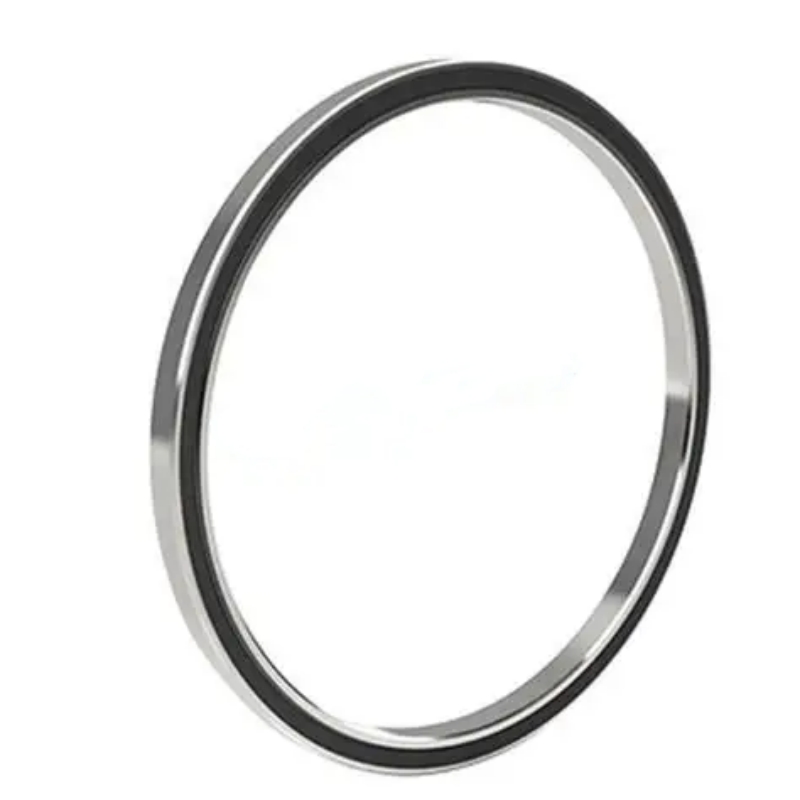
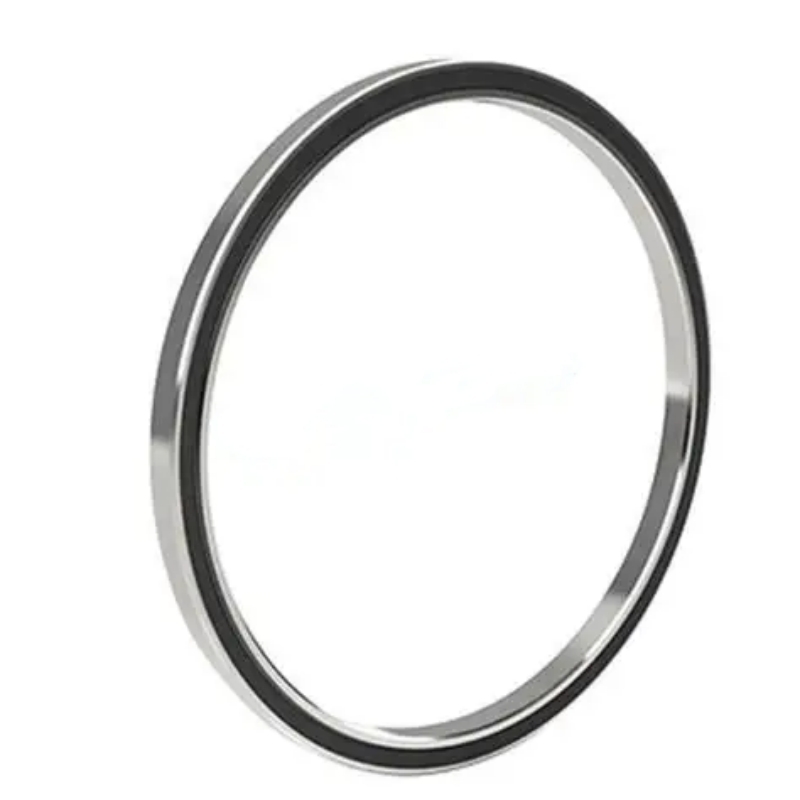
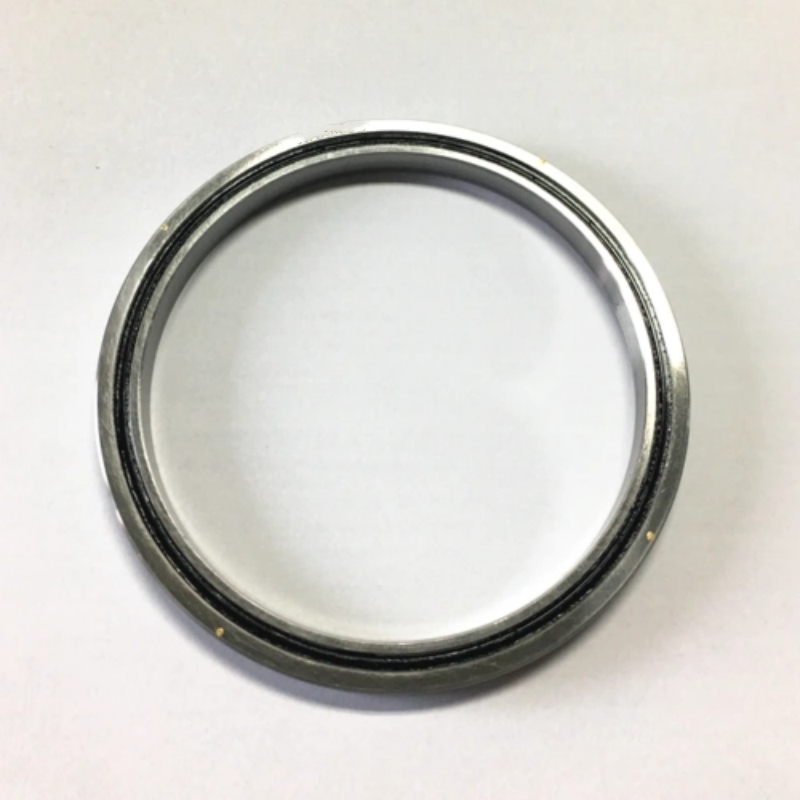
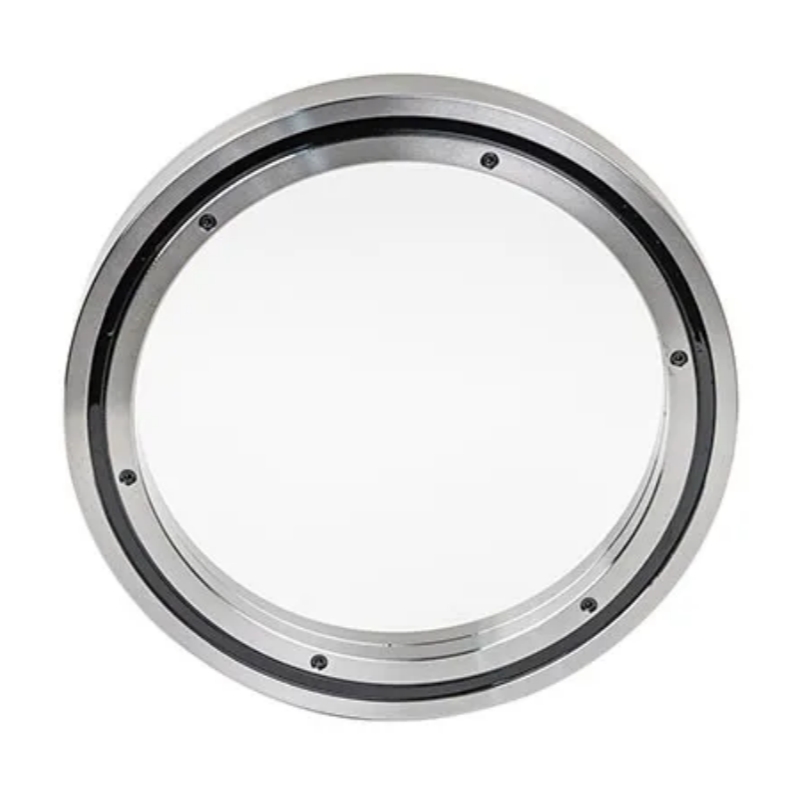
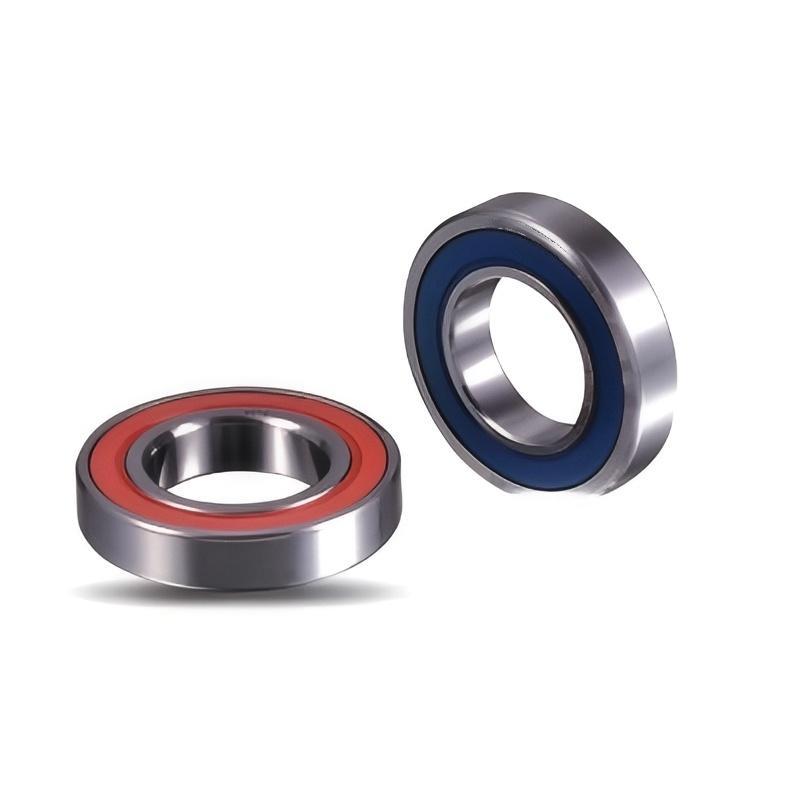
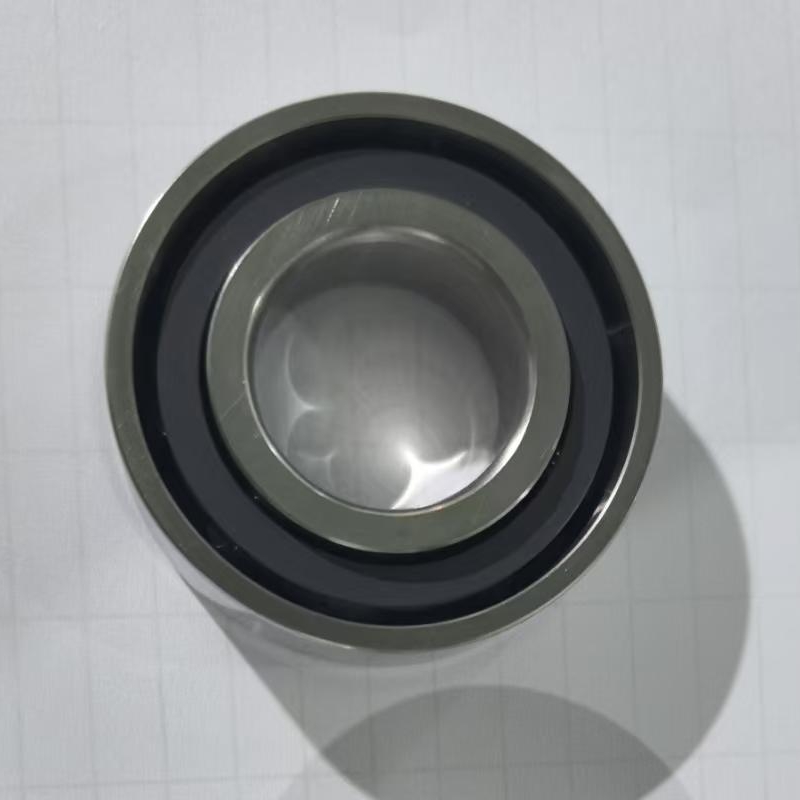
Thin section four-point contact ball bearings are space-saving,single-row bearings featuring a special "gothic arch" raceway that creates four points of contact between the balls and the rings.They are engineered to handle radial,axial,and moment loads simultaneously within a highly compact,lightweight envelope.Inner diameter:20 mm-1000 mm Cross-section:4.7625×4.7625 mm-25.4×25.4 mm.Material:bearing rings and rolling elements steel GCr15 or stainless steel 9Cr18 Precision levels:P0,P6,P5 and P4 Two structural forms are available:open type for clean indoor environments and sealed J-series with rubber contact seals for dust,splash and particle isolation.For lubrication,standard industrial grease and low-outgassing vacuum lubricants are optional.Standard thin section bearing models can be delivered within 7–15 working days,and customized sizes,materials and sealing schemes are arranged according to customer technical drawings.
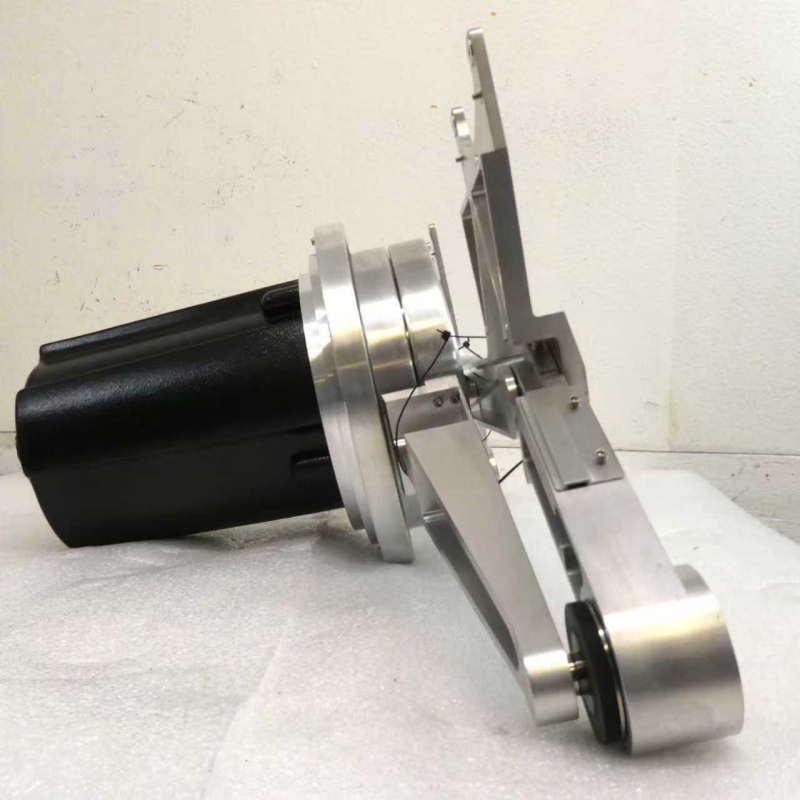
Articulated collaborative robot shoulder,elbow and wrist joint modules are the core rotary execution units of human-machine cooperative robots,widely deployed in electronic assembly,food processing,medical packaging,laboratory handling and flexible automated production lines.Different from heavy industrial robot joints,collaborative robot joints pursue ultra-light weight,miniaturized overall volume,low noise and safe flexible motion to realize close human-machine operation without safety fences.Each joint is integrated with mini servo motors,micro reducers,torque sensors and limit components inside the compact housing.During high-frequency reciprocating rotation,picking and placing operations,the joint bearing needs to continuously bear arm self-weight,workpiece load,alternating overturning moment and frequent forward/reverse impact loads.Collaborative robots put forward extremely strict standards for joint bearings:ultra-low rotational torque fluctuation,micro-level positioning accuracy,lightweight structure,dust-proof and anti-particle performance,and long fatigue service life.Any slight bearing deformation or rotation jitter will directly cause grasping offset,repeated positioning error and abnormal noise during human-machine interaction,which will affect the safety and stability of the whole collaborative workstation.
Multi-Directional Load Capacity:The unique geometry creates four points of contact between the ball and the raceway. This enables the bearing to accommodate bi-directional axial loads, radial loads, and overturning moments.
Space and Weight Savings:Unlike standard bearings where the cross-section scales up with the bore diameter, thin-section bearings maintain a constant cross-section across different sizes. This yields significant mass reduction and a much smaller design envelope.
Replaces Duplex Bearings:By handling thrust loads from both directions and resisting moment loads, a single four-point contact bearing can often do the work of a paired back-to-back or face-to-face angular contact bearing setup.
High Rigidity:They are highly rigid and provide excellent running accuracy, often used with an internal preload (using balls slightly larger than the raceway space) to eliminate clearance and increase overall stiffness.
Aerospace, Defense, & Satellites
Gimbal & Pointing Systems:Used in missile launchers and radar tracking platforms for precise angular control and low-torque movement.
Space Exploration:Deployed in satellites and spacecraft mechanisms where minimizing payload weight is a strict requirement.
Robotics & Automation
Articulating Joints:Utilized in the elbows and joints of robotic arms to reduce friction while handling loads in compact spaces.
Rotary & Indexing Tables:Keeps machine tools and work-holding devices rigid and perfectly aligned with minimal deflection.
Medical & Imaging Equipment
Diagnostic Scanners:Supports smooth, quiet, and stable rotation in large machinery such as MRI and CT scanners.
Surgical Robotics:Enables precise, repeatable motion required for delicate robotic surgical procedures.
Semiconductor Manufacturing
Manufacturing Tools:Used in wafer steppers, chemical mechanical polishers (CMP), and photolithography equipment to achieve high geometric accuracy in vacuum or cleanroom environments.
The Importance of Thin Section Four Point Contact Ball Bearings in Articulated collaborative robot shoulder,elbow,wrist joint modules
Ultra-Thin Constant Cross-Section Reduces Joint Volume & Weight:The uniform thin cross-section structure saves a large amount of internal installation space for collaborative robot shoulder,elbow and wrist modules.Compared with standard ball bearing combinations,a single thin section four point contact bearing greatly reduces the outer dimension and total weight of the joint housing,which meets the core design demands of slim,lightweight collaborative arms and improves the robot's motion flexibility and working radius.
Single Bearing Bears Three Types of Composite Loads:Simultaneously One thin section four point contact bearing can replace two sets of matched angular contact bearings to carry radial arm weight,bidirectional axial force and large overturning moment generated by end tools at the same time.It simplifies the internal transmission structure of joints,reduces the number of parts,and lowers the overall manufacturing and assembly cost of collaborative robots.
Stable Low Torque Ensures High Repeat Position Accuracy:Ultra-precision P4/P5 manufacturing tolerances bring extremely smooth rotation with tiny friction torque fluctuation.When collaborative robots perform delicate assembly and slow-speed human-machine matching movements,the bearing effectively eliminates micro-jitter,guarantees micron-level repeated positioning precision of shoulder,elbow and wrist joints,and avoids workpiece dropping or assembly deviation.
Low-Inertia Structure Improves Robot Dynamic Response:Lightweight inner and outer rings and small-diameter steel balls reduce rotary inertia of joint shafts.The collaborative robot can realize fast acceleration,deceleration and quick position switching without lag,greatly boosting the operating efficiency of flexible assembly lines.
Diversified Sealing & Material Options Match Workshop Scenarios:J-type double rubber sealed thin bearings block dust,plastic fragments and tiny workpiece debris inside assembly workshops;9Cr18 stainless steel customized versions are available for food and medical cobots to resist water and disinfectant splash,effectively extending joint bearing service life.
Long Service Life Cuts Robot Maintenance Frequency:Precision ground raceways and high-hardness steel rolling elements have excellent anti-fatigue performance,adapting long-hour continuous reciprocating rotation of collaborative joints.Low wear characteristics reduce regular lubrication and bearing replacement cycles,lowering production line downtime and after-sales maintenance cost.
Newbeetrans is a professional manufacturer specializing in thin section four point contact ball bearings.We develop customized bearing solutions exclusively for collaborative robot shoulder,elbow and wrist joint modules,as well as slim rotary automation equipment.
Cobot Special Customization:Supply lightweight low-torque thin bearings with food-grade clean grease,full stainless steel and enhanced dust-proof seals;customized prototype samples can be delivered within 10–15 days.
Precision Manufacturing Standard:All inner and outer ring raceways adopt ultra-precision superfinishing to reach P0,P6,P5 and P4 accuracy grades.Every finished bearing undergoes full inspection of dimensional tolerance,rotational torque and runout before shipment.
Global Fast Shipment:Mass stock of standard KA / KB / KC / KD / KF / KG open thin series and JA / JB sealed series supports quick delivery;complete cross-border logistics service covers all global customers.
Authoritative Quality Certification:All products meet ISO 9001 and relevant national precision bearing standards,and SGS test reports can be provided upon request.
For technical specifications,pricing,or custom bearing solutions:
Email:paul@newbeetrans.com
Website:www.newbeetrans.com
 WhatsApp
 sales@newbeetrans.com
 +8615090185276